
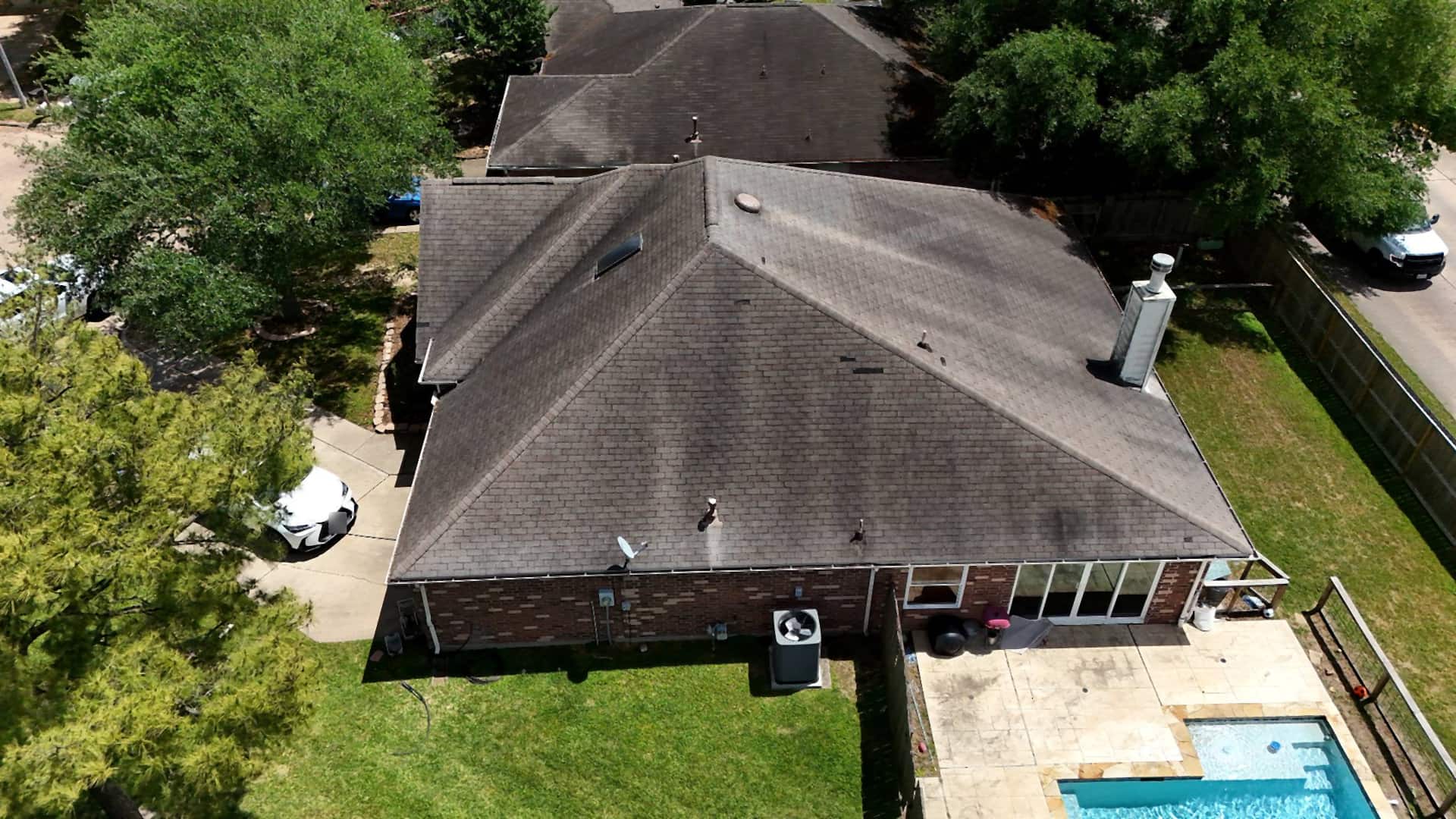
Insurance Claims
What storm & hail damage is covered.
Wind and hail are typically covered perils on Texas homeowners policies — but coverage turns on the kind of damage and how well it's documented. Here's what usually qualifies, the signs adjusters look for, and how sudden storm damage differs from ordinary wear.
- GAF Certified · Factory-certified installer
- 10-Year · Workmanship warranty
- Family-Owned · Houston since 2023
Covered peril vs. wear-and-tear — the distinction that decides everything
Almost every homeowners policy in Texas covers sudden, accidental damage from a specific event — and wind and hail are textbook covered perils. What policies don't cover is gradual wear: a roof that simply aged out, dried out in years of sun, or was never maintained. Nearly every roof claim comes down to which side of that line your damage falls on.
That's why the cause and timing of the damage matter as much as the damage itself. A roof that failed because a documented storm tore the shingles loose is a different conversation than a roof that wore out over fifteen years. The job — ours and the adjuster's — is to identify storm-caused damage and tell it apart from ordinary aging.
It's also why we never coach anyone to exaggerate or invent damage. Legitimate storm damage stands on its own. Our role is to find it, show what caused it, and document it accurately — not to manufacture a claim.
Covered perils are sudden and accidental — like a wind or hail event. Ordinary wear-and-tear isn't. Most of a roof claim is about telling the two apart honestly.
What wind damage looks like
Wind is one of the most common causes of storm damage to Houston roofs, and it isn't always obvious from the ground. These are the signs that typically point to wind damage:
- Blown-off shingles — shingles torn completely off, leaving the underlayment or deck exposed.
- Creased shingles — shingles folded back and cracked along the fold by the wind; the crease breaks the shingle's seal even after it lays back down.
- Lifted shingles — shingles broken free at the edges so they no longer lie flat.
- Loss of adhesion at the seal strip — the factory tar strip that bonds each shingle to the one beneath it is what keeps a roof together in high wind. When a gust breaks that seal, the shingle is no longer bonded down — something an adjuster checks for specifically, even when the shingle looks intact.
What hail damage looks like
Hail damages a roof differently than wind. Rather than tearing shingles off, it bruises the surface — and that damage tends to progress over time:
- Impact marks — small, often round spots where a hailstone struck and knocked granules loose.
- Displaced granules — the granules are the shingle's protective layer; hail strips them off in small spots, exposing the asphalt mat beneath.
- Mat blistering and fiber exposure — over time the exposed mat blisters and its fibers work loose, weakening the shingle at each impact spot.
- Progression to a leak — left unaddressed, those weakened spots keep breaking down until what looked cosmetic becomes an active leak.
Because hail damage develops over time, marks that look minor right after a storm can be the early stage of real failure. Functional hail damage — damage that compromises the shingle, not just its appearance — is what an adjuster is evaluating, which is why prompt, thorough documentation matters.
Does this kind of damage justify a full replacement?
Often, yes — and this surprises a lot of homeowners. When wind or hail damage is widespread across a roof rather than confined to one small area, the legitimate fix is frequently a full replacement, not a patch. Scattered impact marks across every slope, or wind damage that's broken the seal on shingles roof-wide, generally can't be honestly repaired one shingle at a time.
Both wind and hail are qualifiable forms of storm damage that can justify a full roof replacement when the extent supports it. Whether your specific policy pays for that — and at what value — is a decision only your insurer can make, based on your coverage, your deductible, and their inspection. What we can do is make sure the full extent of legitimate damage is found and documented so the claim reflects the real condition of your roof.
Widespread wind or hail damage can justify a full roof replacement rather than a spot repair. The coverage decision is your insurer's; finding and documenting the true extent of the damage is ours.
The documentation that supports a claim
A storm-damage claim is only as strong as its documentation. The goal is to connect specific, visible damage to a specific weather event — and to make that connection easy for an adjuster to verify. When we inspect a roof, that's the record we put together:
- The storm date and the weather event the damage ties back to.
- Clear photos of each type of damage — blown-off, creased, and lifted shingles, broken seal strips, and hail impact marks with granule loss.
- Drone-assisted imagery for a complete overhead record of every slope, including areas that are hard to reach safely.
- Notes on location and pattern — where the damage is, which slopes it's on, and how it's distributed across the roof.
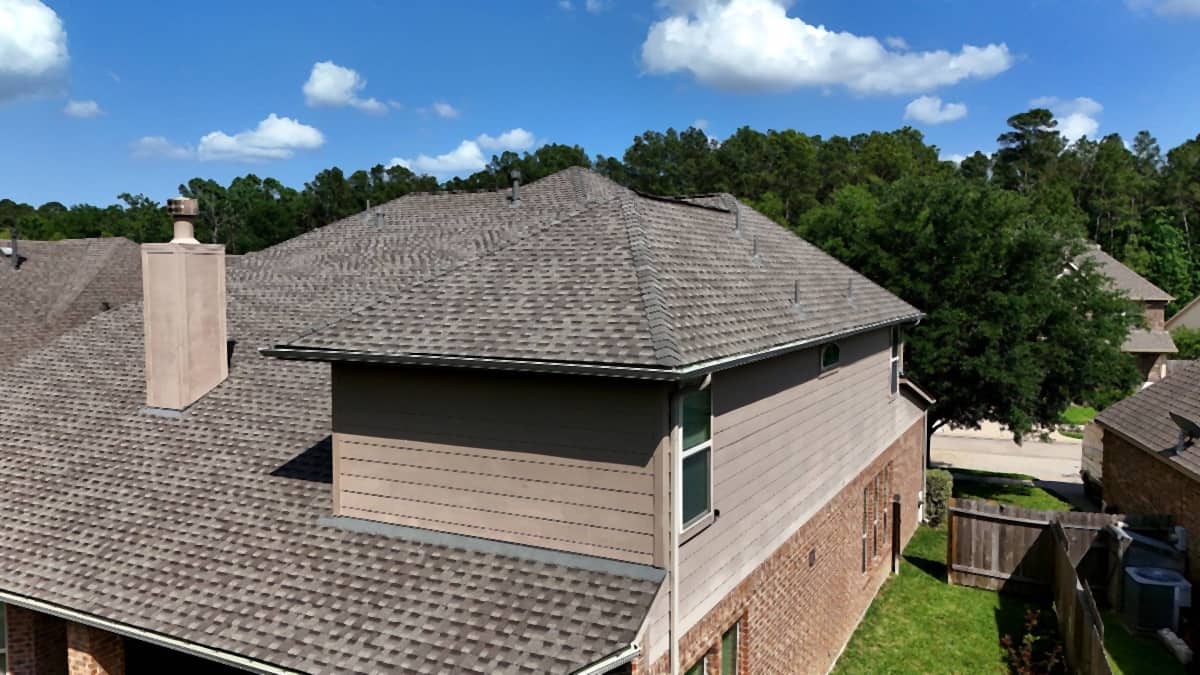
Documenting promptly matters — especially with hail, because the damage progresses, and because policies have time limits for filing after a storm. The sooner it's on record, the cleaner the claim.
How we help — and the next step
We specialize in storm-damage insurance restoration. We start with a free, no-pressure inspection, document what we find honestly, and — if there's a legitimate claim — stand with you through it: we attend the adjuster meeting and walk the roof with them, supplement items that were legitimately owed but left off the first estimate, and hand you a documentation packet for your records and renewal.
We can't promise how your insurer will rule — no honest roofer can, and anyone who guarantees a claim outcome should worry you. What we can promise is an honest inspection and thorough documentation. The full step-by-step of how a Texas roof claim works — filing, the adjuster meeting, RCV vs. ACV, supplements, and denials — is laid out across our Insurance Claims hub.
If a storm has come through and you're not sure whether you have a claim, the smartest first move is a free inspection. We'll get on the roof, take an honest look, and tell you straight what we find. Call us at (346) 276-6492.
Not sure whether your roof took covered damage? A free, no-pressure inspection gives you a straight answer. Call (346) 276-6492.
Free · instant · no phone number needed
Was your roof in one of these storms?
Enter your address and we'll show you every hail and damaging-wind report NOAA recorded near it since 2019. Knowing the date a storm hit your roof is the single most useful fact in an insurance claim — and this costs you nothing.
Source: NOAA / NCEI Storm Events Database — reports filed by trained spotters, officials and the public. These are reports, not radar coverage: if nothing shows up near you it means nobody filed a report there, not that no hail fell. The only way to know what your roof actually took is to look at it.
Questions, answered
Common questions
Is wind damage to my roof covered by insurance?
Wind is a covered peril on most Texas homeowners policies, so wind damage — blown-off, creased, or lifted shingles, or shingles whose seal strip has broken — is often covered. Every policy and claim is different, though, and the coverage decision is your insurer's. What we do is inspect honestly, document the damage thoroughly, and stand with you through the claim. We can't guarantee any specific outcome.
Is hail damage covered even if my roof isn't leaking yet?
It can be. Insurers evaluate functional hail damage — granule loss that exposes the asphalt mat, blistering, and weakened spots — not just active leaks. Because hail damage progresses over time, damage that hasn't leaked yet can still be legitimate, documentable storm damage. The key is documenting it accurately and promptly. Whether it's covered is ultimately your insurer's decision.
What's the difference between storm damage and normal wear-and-tear?
Covered perils are sudden and accidental — a wind or hail event on a specific date. Wear-and-tear is gradual: a roof that aged out or deteriorated over years, which policies generally exclude. Most roof claims come down to separating storm-caused damage from ordinary aging — which is exactly what an honest inspection and good documentation are for.
Does storm damage mean I get a whole new roof, or just a repair?
It depends on how widespread the damage is. Isolated damage may only call for a repair; damage spread across the roof — scattered hail impacts on every slope, or wind that's broken the seal on shingles roof-wide — often can't be honestly repaired piecemeal and can justify a full replacement. The extent of legitimate damage drives that, and your insurer makes the final coverage call.
How do I prove the damage came from a particular storm?
By connecting the damage to the event: the storm date, photos of the specific wind and hail signs, drone imagery of every slope, and notes on the damage pattern. That's the record we build during the inspection. Filing promptly helps too, since policies have time limits and hail damage worsens the longer it sits.
Free, no-pressure
Get your damage documented — free
Before you file, after a denial, or mid-claim — we document the damage properly and stand with you through it. You get photos of every problem area, written findings in plain English, and a repair estimate if a repair is the honest answer. Emailed to you and left with you in print — yours to keep, whether you hire us or not.
- Photos of every problem area on your roof
- Written findings, in plain English
- A repair estimate, if a repair is the honest answer
If it's storm damage, we handle the insurance claim with you. Financing available.
Roof leaking? We answer 24/7 — call any hour. Or email Aldo@handyhandsroofing.com
Get your free roof report
Name and phone is all we need — we'll call you back. No obligation.
Got it — we have your details
Thanks — we’ll contact you about your request. Prefer to talk now? Call (346) 276-6492.
GAF Certified · 10-Year Workmanship Warranty · Insurance restoration specialists