
Resources
How long does a roof last?
The number on the box is a best case. In Houston's heat, what you actually get depends as much on how the roof was built and ventilated as on the material. Here's the honest breakdown.
- GAF Certified · Factory-certified installer
- 10-Year · Workmanship warranty
- Family-Owned · Houston since 2023
The short answer for Houston: builder-grade 3-tab asphalt lasts about 15–20 years, an architectural shingle system like GAF Timberline HDZ about 25–30, metal roughly 30–70 depending on type, and tile or slate can pass a century — but the install and the ventilation decide whether your roof reaches its number. "How long does a roof last?" has a number-on-the-box answer and an honest answer. The box answer is the lifespan the manufacturer prints under ideal conditions. The honest answer, in Houston, is usually lower — because heat, sun, storms, and humidity all age a roof faster than a lab does, and because how the roof was installed and ventilated matters as much as what it's made of. Here's both, material by material.
Lifespan by material
Here's the realistic range for each roofing system, plus what tends to happen to it in Houston specifically:
| Material | Typical lifespan | The Houston reality |
|---|---|---|
| 3-tab asphalt (older / builder-grade) | ~15–20 yrs | Often less — heat and storms are hard on the cheapest shingle |
| Architectural asphalt (GAF Timberline HDZ) | ~25–30 yrs | A bit shorter under constant heat — but a properly built, ventilated system reaches the high end |
| Metal — corrugated R-panel | ~30–45 yrs | Holds up well; fasteners and seals are the watch items |
| Metal — standing seam | ~50–70 yrs | Excellent — reflects heat instead of absorbing it |
| Clay / cement tile | 50–100+ yrs | Tiles can outlast the home; the underlayment beneath needs replacing first (~20–30 yrs) |
| Slate | 75–100+ yrs | The longest-lived roof there is |
Two things to take from the table: the gap between materials is real, and the "Houston reality" column is where most homeowners get surprised.
Why Houston roofs age faster
The same roof lasts longer in a mild climate than it does here. Four things drive that:
- Heat and UV — constant sun bakes the surface and dries out the materials that keep water out.
- Storms — every hail and high-wind event ages a roof, even when it still "looks fine" from the ground.
- Humidity and algae — moisture feeds the algae that streaks Houston roofs and works on the materials over time.
- Trapped attic heat — a roof that can't breathe cooks from underneath, aging from both sides at once.
On a Houston roof, the wide-open field of shingles is rarely what fails first — it's the small, sun-baked details. Pipe boots and flashing sealant crack, hip and ridge caps lose their seal, and the south- and west-facing slopes tend to wear ahead of the rest. By the time those show up, they're telling you where the roof's real age is.
What shortens roof life
Beyond the climate, the avoidable things that cut a roof's life short:
- Poor ventilation — the biggest quiet one. An unbalanced attic shortens a roof by years.
- A poor install — wrong nailing, bad flashing, skipped underlayment. The roof fails where it was built weakest.
- Deferred small repairs — a cracked boot or a few lost shingles, left alone, becomes a leak and then decking damage.
- Roofing over old layers — extra layers trap heat and hide problems, and they age faster.
How to get more years out of your roof
The good news is most of what shortens a roof is in your control:
- Get the ventilation right — it's the highest-value thing you can do (more in our ventilation guide).
- Fix small things early — boots, sealant, flashing, and a handful of shingles are cheap now and expensive later.
- Look after a storm — even a "fine"-looking roof can have a broken seal that speeds the clock.
- Start with a proper install — the material sets the ceiling; the install and ventilation decide whether you ever reach it.
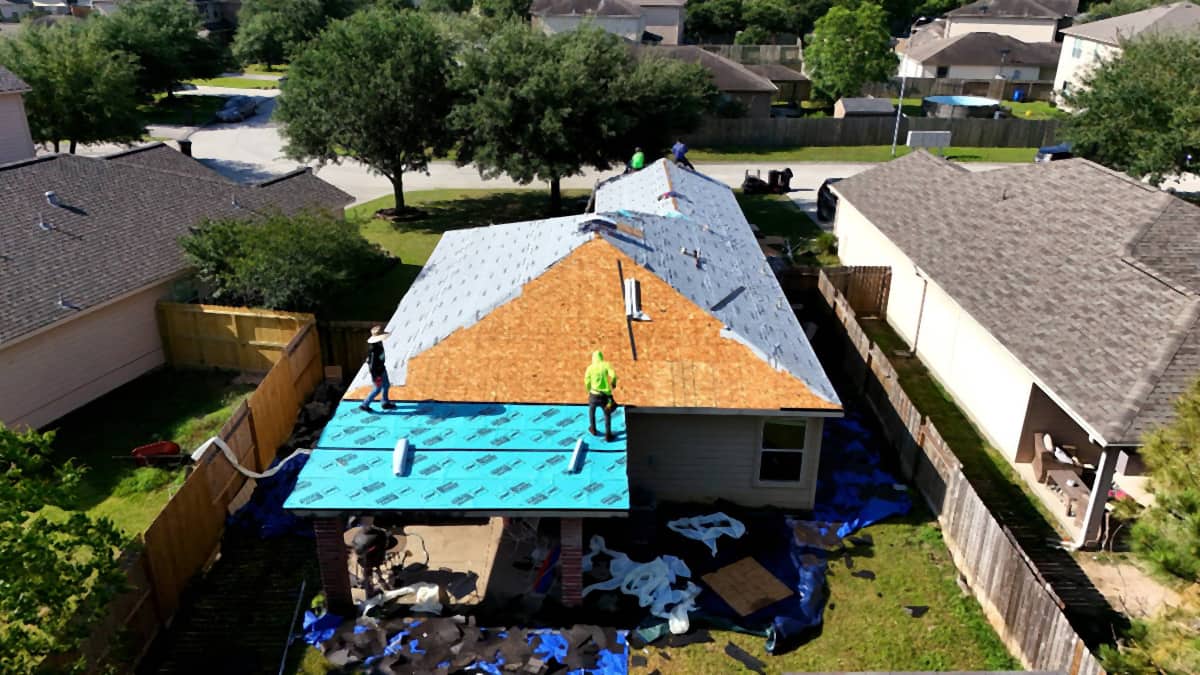
That last point is the whole story. We build to reach the high end of a roof's range — proper underlayment, correct flashing, balanced ventilation, clean workmanship — backed by our 10-year workmanship warranty on the labor.
Not sure how much life is left in yours?
If your roof is getting up there in age, or a storm has you wondering, the honest move is to have someone who knows roofs take a look — not guess from the driveway. We'll give you a straight read on where your roof actually stands and how long it's likely to have left.
Call (346) 276-6492 or email Aldo@handyhandsroofing.com for a free, no-obligation inspection.
Questions, answered
Common questions
How do I know how old my roof is?
If you bought the home, your closing documents or a local permit record may show the last roof. Otherwise the roof itself tells you — granule loss, curling or brittle shingles, and worn pipe boots all point to age. An inspection gives you a realistic read.
Can I make my roof last longer?
Yes, more than most homeowners realize. Balanced attic ventilation is the biggest lever — a roof that can't breathe cooks from underneath — and catching small issues early keeps a cheap fix from becoming a leak.
Why doesn't my roof last as long as the warranty says?
The lifespan on the wrapper is a best case under ideal conditions. Houston's heat, sun, storms, and humidity push the real number lower, and a poor install or trapped attic heat pushes it lower still. A properly built, well-ventilated roof is what reaches the high end of its range.
Should I repair or replace an older roof?
It depends on age, material, and how widespread the wear is. A younger roof with a localized problem is usually a repair; an older roof leaking in more than one place is usually telling you it's time. Our 7 signs guide walks through how to tell — and we'll give you a straight answer when we look.
Free, no-pressure
Get your free roof report
We get on the roof, and you get a real document — not a sales pitch. You get photos of every problem area, written findings in plain English, and a repair estimate if a repair is the honest answer. Emailed to you and left with you in print — yours to keep, whether you hire us or not.
- Photos of every problem area on your roof
- Written findings, in plain English
- A repair estimate, if a repair is the honest answer
If it's storm damage, we handle the insurance claim with you. Financing available.
Roof leaking? We answer 24/7 — call any hour. Or email Aldo@handyhandsroofing.com
Get your free roof report
Name and phone is all we need — we'll call you back. No obligation.
Got it — we have your details
Thanks — we’ll contact you about your request. Prefer to talk now? Call (346) 276-6492.
GAF Certified · 10-Year Workmanship Warranty · Insurance restoration specialists