
Roofing
Flat & low-slope roofing in Houston.
Some roofs — or just one stubborn section of a roof — are too low-pitched for shingles to protect. Flat and low-slope roofing is a service we provide for Houston homes — here's how to tell when you need it, why it matters in our weather, and how we assess your roof and install the right system.
- GAF Certified · Factory-certified installer
- 10-Year · Workmanship warranty
- Family-Owned · Houston since 2023
Why can't shingles go on a flat roof?
Shingles shed water downhill; they rely on slope. On a flat or low-slope section, water sits instead of running, and it works back under the shingle laps. Those sections need a membrane system that is sealed rather than layered. We assess the pitch first, then install the right system.
Why a low-slope roof can't be a shingle roof
Asphalt shingles work by overlapping, like fish scales, so water runs down the slope and off the edge before it can get underneath. That system depends on gravity and pitch. Take away enough slope and the whole premise breaks down: water slows, pools, and backs up under the shingle courses instead of shedding off. In Houston, where a single afternoon storm can drop more rain than a low-slope roof can drain in time, that's a recipe for leaks no matter how well the shingles are installed.
That's why shingle manufacturers publish a minimum slope for their products. Below that threshold, more shingles, more sealant, or more nails won't save the roof — it needs a fundamentally different, membrane-based system designed for water that sits rather than runs. The two are not interchangeable, and a contractor who tries to force shingles onto a flat section is setting you up for a callback.
We say this plainly because it's the honest version: if your roof is too low-slope for shingles, the right answer is the right system for that slope — not a workaround.
If you don't need it, we'll tell you. The point of the inspection is a straight answer about what your roof actually requires — not a sales pitch for the most expensive option.
The classic Houston scenario: one flat section on a sloped roof
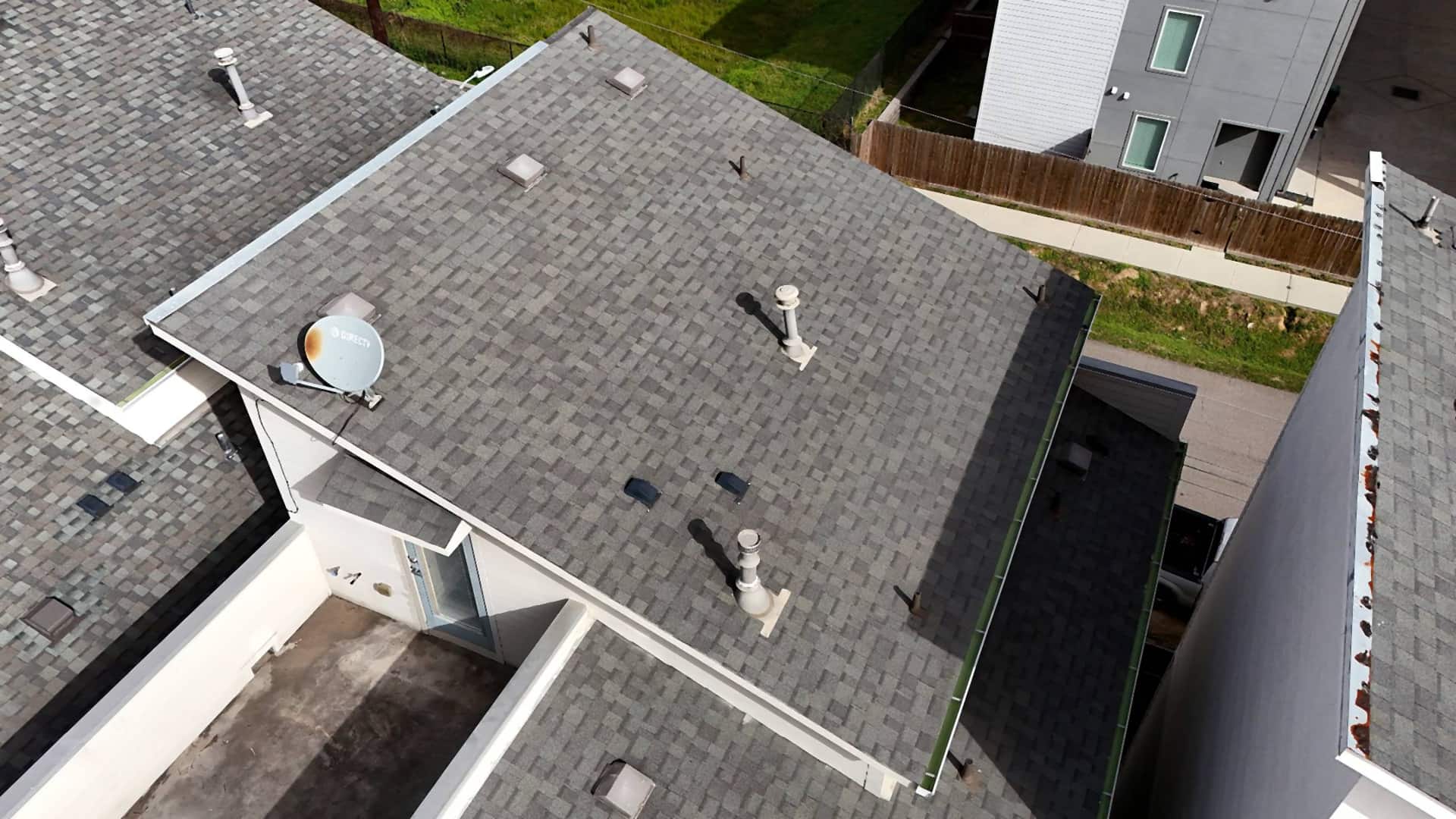
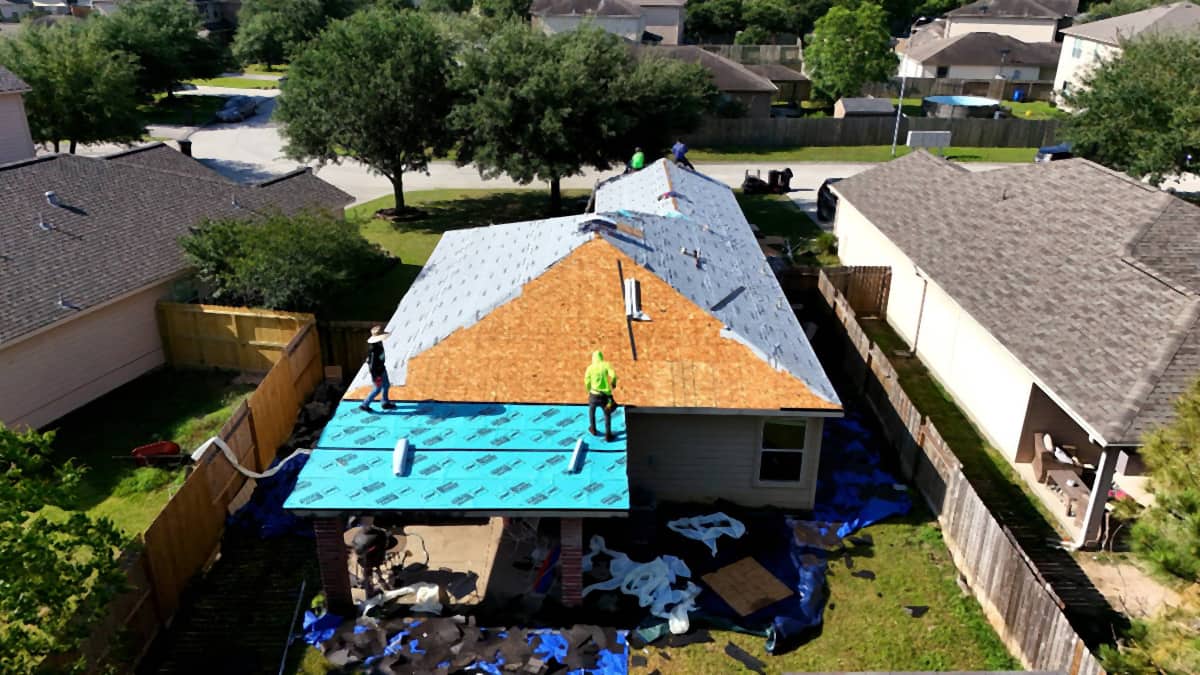
Most homeowners who call us about a "flat roof" don't have a flat house at all. They have a steep, healthy shingle roof — and one low-slope section that keeps leaking. Back porches, patio covers, carports, room additions, and dormers are the usual suspects. The main roof sheds beautifully; the low section that was tacked on never had a fair chance with shingles.
Two things go wrong at once. First, the low-slope section can't drain fast enough and water sits on it. Second, all the water coming off the steep roof above gets dumped onto that section and into the seam where the two roofs meet. That transition — and the flashing in it — is where repeat leaks are born.
Patching it with another layer of shingles almost never holds. The durable fix is matching each section to its slope and getting the flashing between the steep and low-slope areas right. That's an assessment question, which is exactly why we start with a look at the actual roof rather than a quote over the phone.
How we assess — and build — a flat or low-slope roof
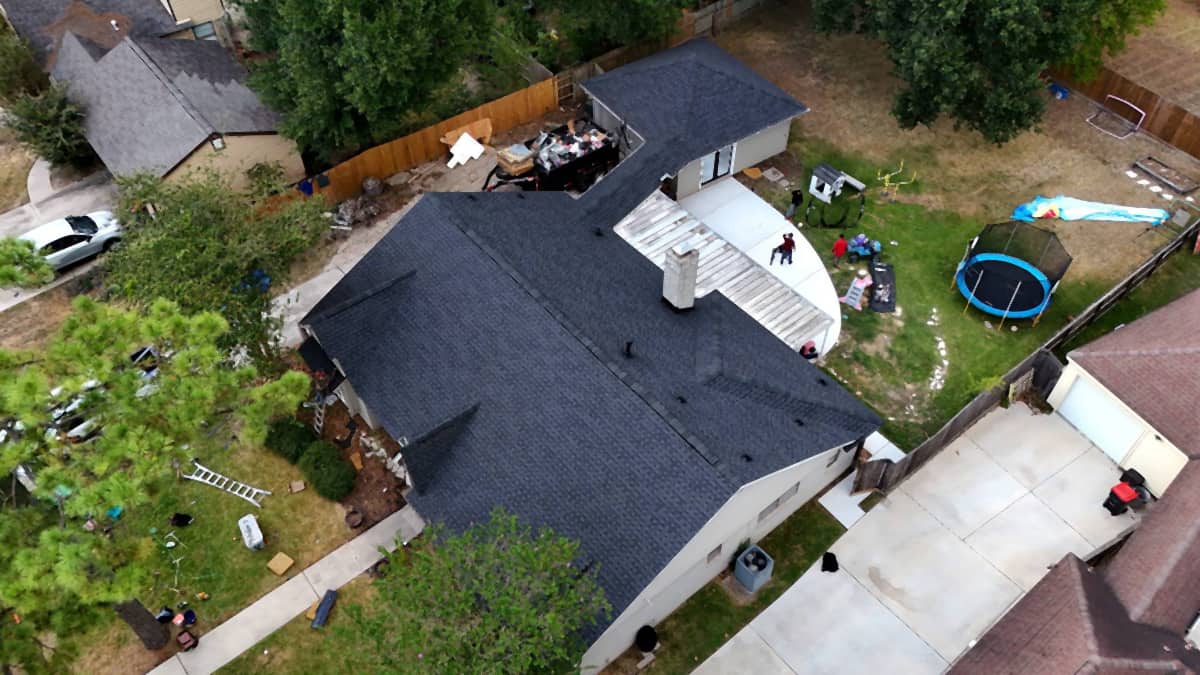
When we come out, we measure your real pitch section by section — because the line between "shingle" and "needs a low-slope system" is a number, not a guess. We map which areas are sloped enough for the GAF shingle system we install on most Houston homes, and which areas need a different, membrane-based approach. We look hard at drainage, at every penetration, and at the flashing where roof planes meet, since those are where low-slope roofs fail first.
Then we give you the honest version: what's actually wrong, whether it's a repair or a replacement, and what the right system is for each part of your roof. When a section needs a low-slope membrane system, we install it — this is work we do for Houston homeowners, not something we hand off — and we build it to handle water that sits rather than runs.
The inspection is free and there's no pressure. Call us at the number on this page to set it up.
- Pitch measured per section, so the shingle-vs-membrane line is based on your real slope
- A close look at drainage and standing-water patterns
- Inspection of penetrations and the flashing where roof planes meet — the first places low-slope roofs leak
- A clear, written-down recommendation: repair vs. replace, and the right system for each section
Where shingles do belong — our complete GAF system
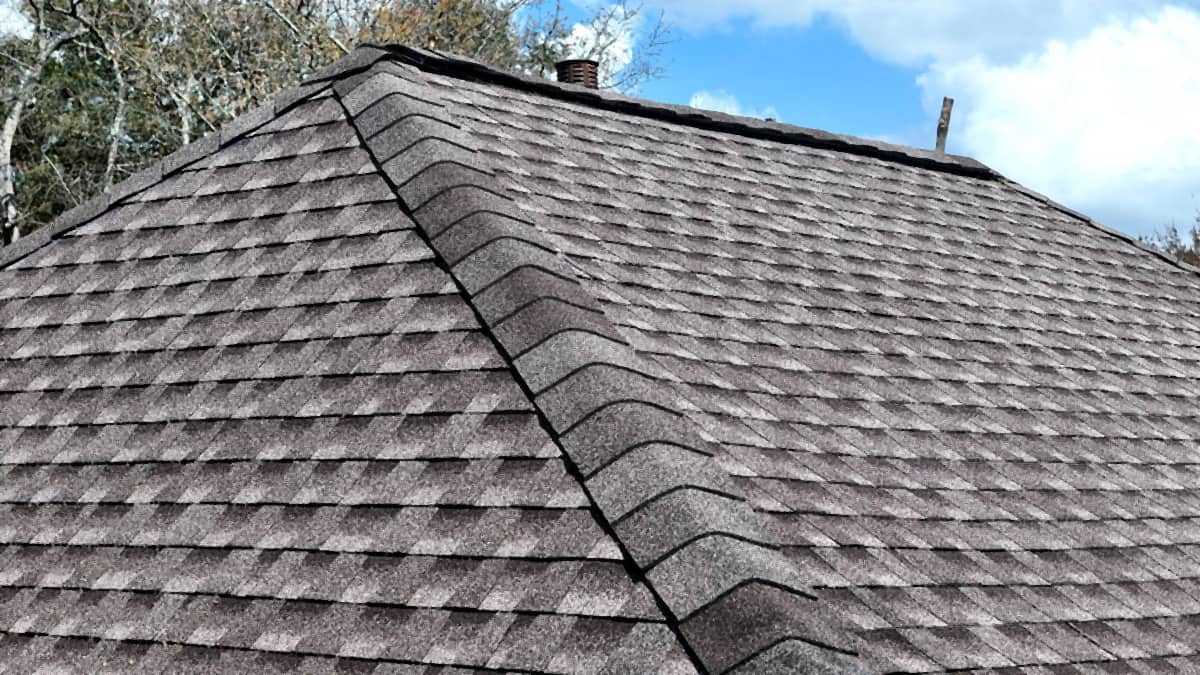
For the parts of your roof that are properly sloped, we don't cut corners. Every shingle roof we build is the complete GAF system, deck up: we inspect and re-nail the deck to code, lay FeltBuster synthetic underlayment (not 15# felt), add StormGuard ice-and-water shield at valleys, penetrations, and vulnerable edges, and set purpose-made starter strips at the eaves and rakes.
On top of that go GAF Timberline HDZ shingles installed with LayerLock and a full 6-nail pattern (not 4), TimberTex impact-resistant hip-and-ridge caps, and balanced ventilation with calculated intake and exhaust — ridge vents where the roof allows. Every roof gets new flashing (never re-used or just re-caulked) and a full magnetic nail sweep when we're done.
If you want more, you can step up to GAF Timberline UHDZ for a larger nailing zone and richer profile, or Timberline AS II (Class 4) for impact resistance that may qualify you for an insurance premium discount. The sloped-roof system is backed by a three-part warranty stack: the GAF System Plus registered manufacturer warranty, GAF WindProven with no maximum wind-speed limit, and our own Handyhands 10-year workmanship warranty.
To be clear: this GAF system is built for sloped shingle roofs. Low-slope sections call for a different, membrane-based system — which is exactly why the inspection matters.
Storm damage, insurance & next steps
A low-slope roof can take storm and hail damage that's a legitimate insurance claim, the same as a shingle roof. We specialize in storm-damage insurance restoration: an honest inspection, thorough documentation, attending the adjuster meeting with you, supplementing items you're legitimately owed, and handing you a documentation packet for your renewal. We can't promise a specific outcome — that depends on your policy — but we'll do the work straight. The full walk-through of how claims work in Texas lives on our Insurance Claims hub.
We're a family-owned, GAF-certified contractor serving Houston, Katy, Cypress, Spring, Tomball, The Woodlands, Pearland, Sugar Land, Memorial, and The Heights, and we offer financing. Whether your roof is all shingle, all low-slope, or the common mix of both, the smartest first move is the same: a free inspection and an honest answer about what your roof actually needs.
Not sure whether your low-slope section needs a membrane system or just a repair? A free inspection gives you a straight answer.
Questions, answered
Common questions
Can you just put shingles on my flat or low-slope roof?
In most cases, no — and you shouldn't want us to. GAF Timberline HDZ asphalt shingles are designed to shed water down a slope. On a roof that's too low-pitched, water sits, backs up under the shingle courses, and finds its way inside. Below the slope thresholds shingle manufacturers publish, the correct solution is a membrane-style system built for low-slope conditions, not shingles. The honest first step is a free inspection so we can measure your actual pitch and tell you straight what your roof needs.
How do I know if my roof counts as 'low-slope'?
Roofers describe slope as a pitch ratio — how many inches a roof rises over a 12-inch run (for example, 2:12 or 4:12). Many porches, additions, dormers, and some modern homes have one or more sections that fall into the low-slope range even when the main roof is a steeper shingle roof. You don't have to figure this out yourself. We measure it during the inspection and show you which sections are which.
My main roof is shingles but the back porch always leaks — is that a low-slope problem?
It often is. A very common Houston scenario is a steep, healthy shingle roof married to a nearly flat porch, patio cover, or room addition. Water that pours off the main roof onto a low-slope section, plus standing water on that section, is a classic source of repeat leaks. Putting more shingles on the flat part rarely fixes it. The fix is the right system for that section's slope, plus correct flashing where the two roofs meet.
Will insurance cover storm damage to a flat or low-slope roof?
Storm and hail damage to a low-slope roof can be a legitimate insurance claim, just like damage to a shingle roof. We specialize in storm-damage insurance restoration — an honest inspection, thorough documentation, attending the adjuster meeting, and supplementing legitimately owed items. We can't promise any specific claim outcome, and coverage always depends on your policy. See our Insurance Claims hub for how the process works in Texas.
Do you offer financing for this?
Yes, we offer financing. Ask us about it when we come out for your inspection and we'll walk you through the options.
Free, no-pressure
Get your free roof report
We get on the roof, and you get a real document — not a sales pitch. You get photos of every problem area, written findings in plain English, and a repair estimate if a repair is the honest answer. Emailed to you and left with you in print — yours to keep, whether you hire us or not.
- Photos of every problem area on your roof
- Written findings, in plain English
- A repair estimate, if a repair is the honest answer
If it's storm damage, we handle the insurance claim with you. Financing available.
Roof leaking? We answer 24/7 — call any hour. Or email Aldo@handyhandsroofing.com
Get your free roof report
Name and phone is all we need — we'll call you back. No obligation.
Got it — we have your details
Thanks — we’ll contact you about your request. Prefer to talk now? Call (346) 276-6492.
GAF Certified · 10-Year Workmanship Warranty · Insurance restoration specialists