
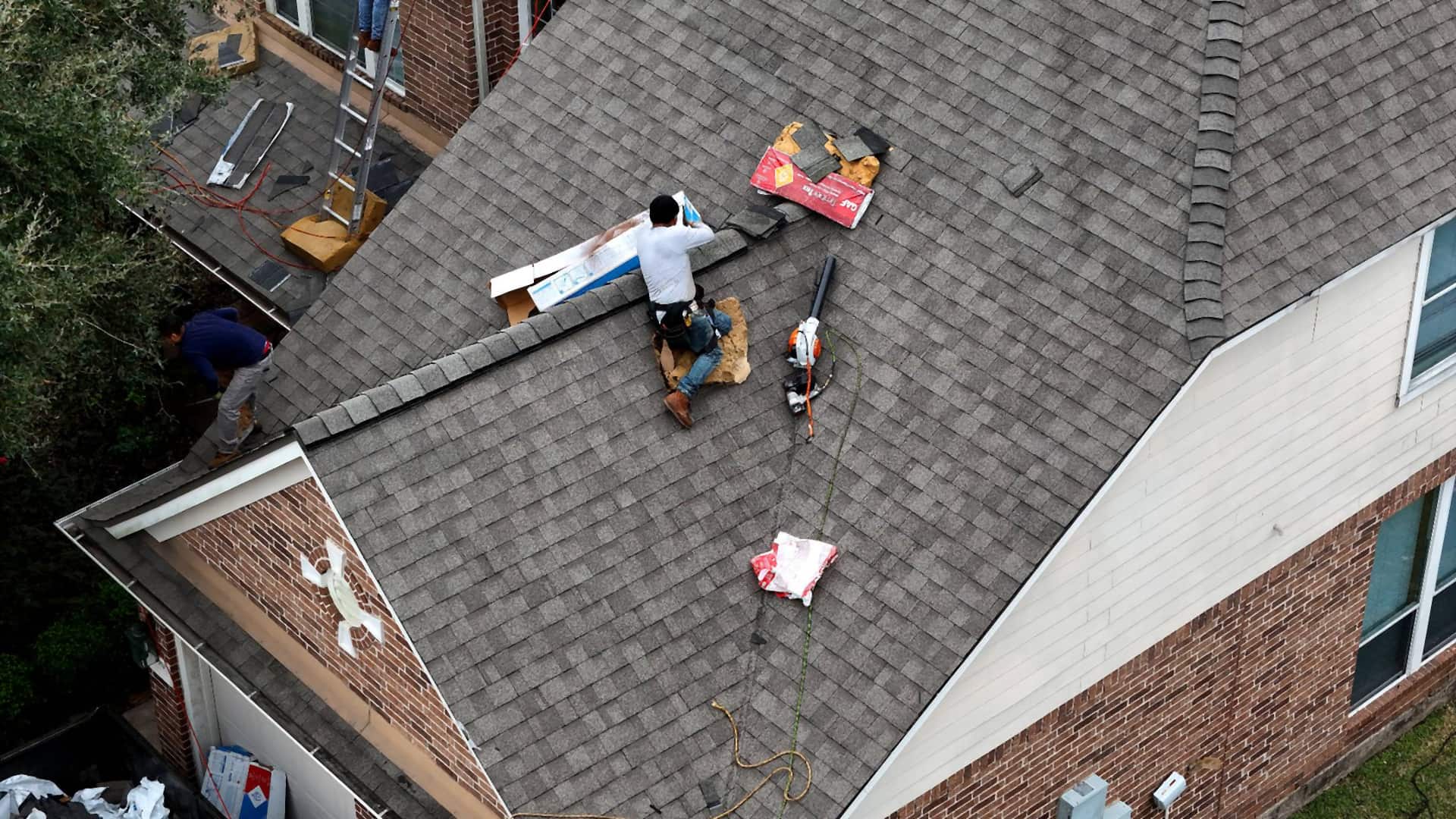
Roofing
Roof repair, diagnosed honestly.
Not every roof needs replacing. We find the real source of the leak, fix it properly, and tell you straight when a repair is the smart call — and when it is not.
- GAF Certified · Factory-certified installer
- 10-Year · Workmanship warranty
- Family-Owned · Houston since 2023
Should I repair my roof or replace it?
Repair is the honest answer when the problem is one spot: a lifted shingle, a failed flashing detail, a cracked boot. Replacement is right when the whole roof is worn out. We get on the roof, find the real source of the leak, and tell you straight which one you are looking at.
Repair first — when a repair is actually the right answer
Plenty of roofers look at a leak and quote a whole new roof. We don't work that way. A roof that's structurally sound and still has good life left in it usually deserves a repair, not a replacement — and if that's what your roof needs, that's what we'll tell you.
A repair is the right call when the damage is localized and the rest of the roof is in honest shape: a handful of shingles torn off in a windstorm, a single failed flashing detail at a chimney or vent, a small puncture, or a leak traced to one specific spot. Fix the actual problem, and the roof goes back to doing its job.
The whole point of getting an expert on the roof is to find out which situation you're actually in. We'd rather earn your trust with an honest repair today than sell you a roof you didn't need.
If you don't need a new roof, we'll tell you. An honest repair beats an unnecessary replacement every time.
The repairs we do most in Houston
Most of what we're called out for in Houston isn't a dramatic blowout — it's the small, quiet stuff that lets water in over time. Between Gulf Coast wind, heavy rain, hail, and relentless heat, a handful of repairs come up again and again. Caught early, they stay small and inexpensive.
- General maintenance — the periodic tune-up that catches problems before they become leaks: checking seals, fasteners, flashing, and worn spots while they're still cheap to fix.
- Pipe-jack (pipe boot) sealing — the collars that seal around plumbing vent pipes dry out and crack in the Houston sun, and they're one of the most common leak sources on a roof. We re-seal or replace the boot so the penetration is watertight again.
- Sealing exposed nail heads — exposed or backed-out fasteners are a classic slow leak. We seal them with the proper roofing sealant so they don't rust through or let water track in.
- Missing or damaged shingles — blown-off, cracked, curling, or lifted shingles that leave the layers beneath them exposed.
- Flashing repairs — resealing or replacing the metal that protects the transitions at chimneys, walls, skylights, and valleys.
- Active leaks — tracing water stains, attic drips, and damp decking back to the real point of entry.
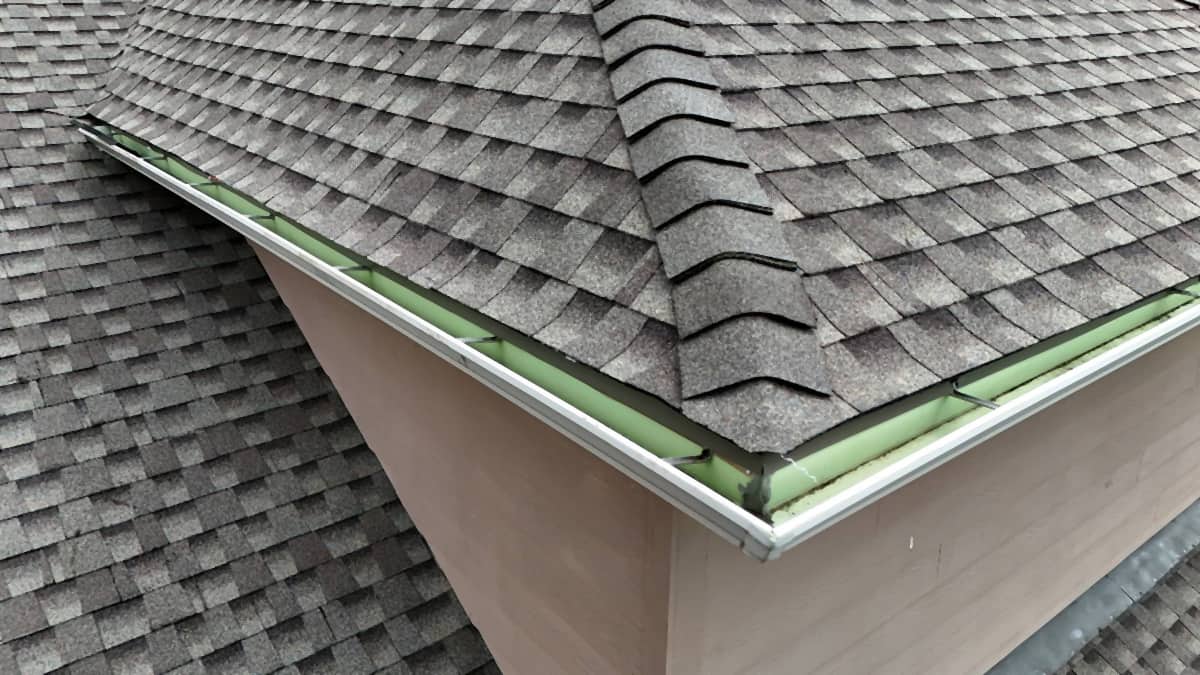
Most leaks start small. The ones that get expensive are the ones nobody caught early — which is exactly why routine maintenance pays for itself.
How we diagnose a leak
A leak almost never starts where it shows up inside. Water finds an opening up top, then travels along the decking, the framing, or the underlayment before it finally drips into a room. Chase the stain on the ceiling and you'll usually miss the real source — which is exactly why DIY patches and rushed repairs so often fail.
We work it the other way around. We get on the roof and inspect the whole system, not just the spot under the stain — shingles, valleys, flashing at every wall and chimney, pipe boots and vents, and the condition of the decking. We trace the water back to where it's actually getting in, then confirm what's causing it before we touch anything.
That matters because the visible damage and the real source are often in two different places. Finding the true point of entry is the difference between a repair that holds and one that has you calling back after the next storm.
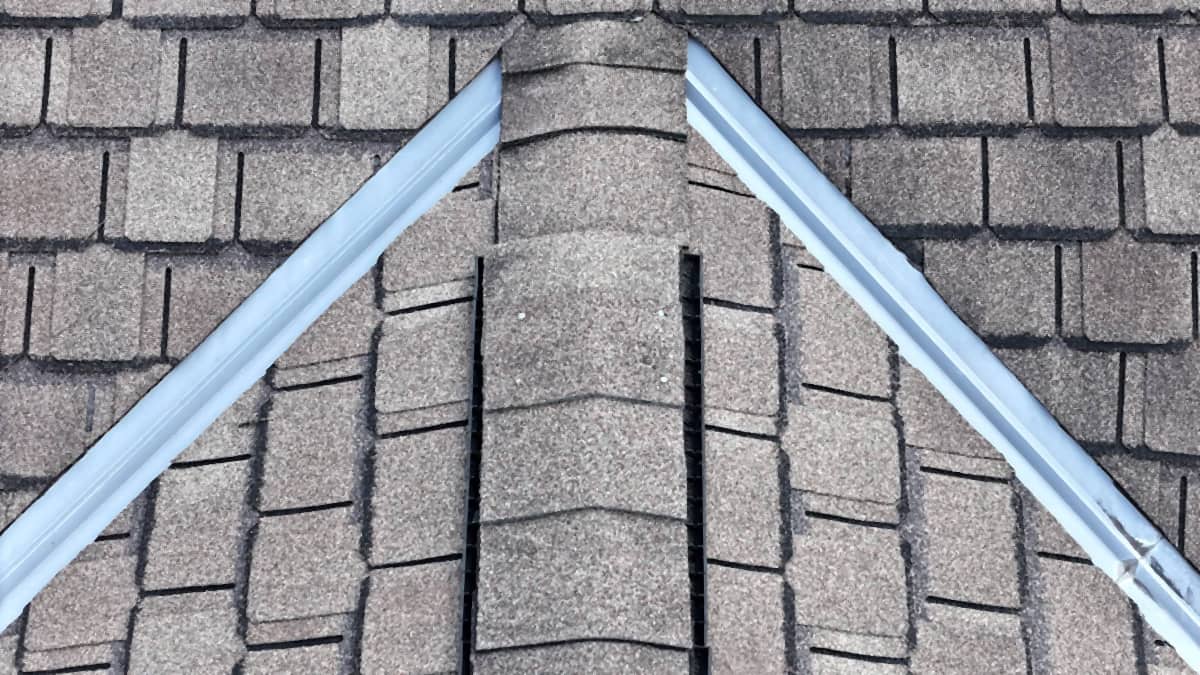
Flashing & penetration repairs
Flashing and roof penetrations are where most roofs actually leak — not out in the open field of shingles, but at the transitions: where the roof meets a chimney or wall, in the valleys where two slopes drain together, around skylights, and at every pipe and vent poking through the surface.
There's a right and a wrong way to use sealant on a roof, and the difference matters. Sealing an exposed or backed-out nail head with the proper roofing sealant is a legitimate, lasting fix — that's the tool doing the job it's made for. What doesn't work is running a bead of caulk over an old, failed flashing and calling it fixed: as a substitute for real flashing, sealant just dries out, cracks, and the leak comes right back. When a flashing detail has actually failed, the right fix is new flashing installed correctly — not caulk smeared over the old problem.
Worn pipe boots and vent seals get the same honest treatment: if the boot has failed, we re-seal or replace it rather than burying it in caulk. The goal is a repair that's watertight for the long haul — done the way it would be done on a full roof, just scoped to the area that needs it.
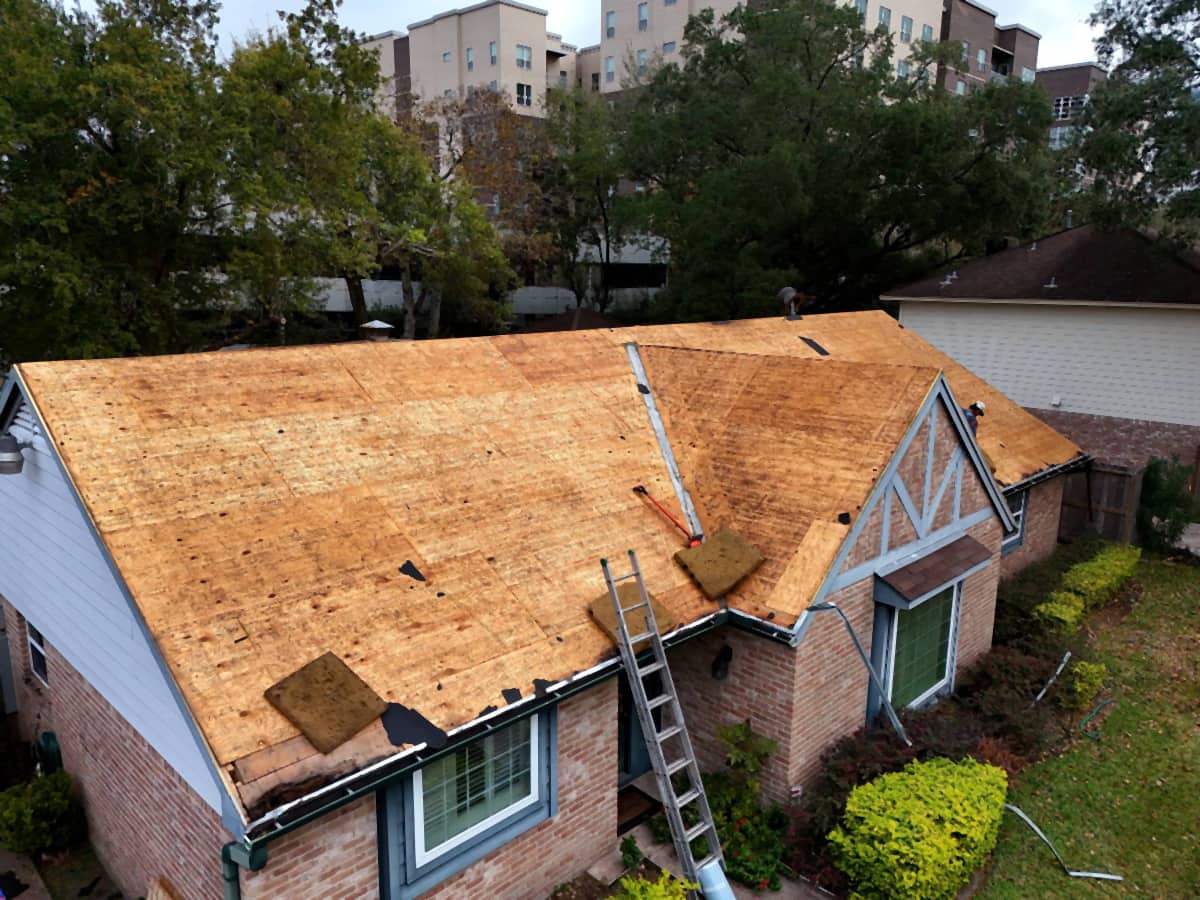
When repair is smart — and when replacement is the smarter call
The honest answer depends on what we find. A repair is the smart move when the damage is isolated, the roof is otherwise sound, and there's plenty of service life left. In that case, fixing the problem area is the right call — and the responsible one.
Replacement becomes the smarter long-term call when the problems aren't isolated. If a roof is near the end of its lifespan, shedding granules across the whole surface, leaking in multiple spots, or showing widespread storm damage, repairs turn into a game of whack-a-mole — you patch one area and the next failure shows up a few feet over. At some point, pouring money into repairs costs more than it's worth, and a full replacement is the better investment.
When replacement is genuinely the right answer, we replace the whole system — deck up — not just the shingles: FeltBuster synthetic underlayment, StormGuard leak barrier at the vulnerable details, GAF Timberline HDZ shingles, TimberTex hip & ridge, new flashing, and balanced ventilation, all backed by our 10-year workmanship warranty. But we won't push you there unless your roof actually needs it.
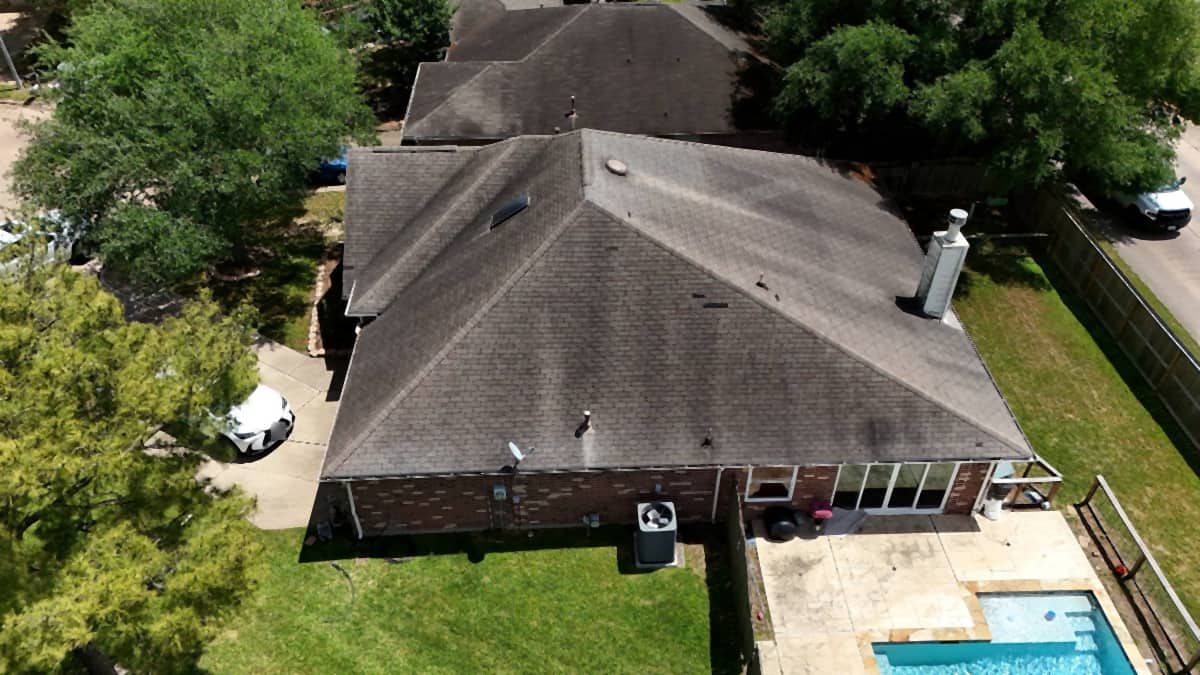
Repair or replace, you'll get a straight recommendation based on what's actually on your roof — not on what's most profitable to sell.
Storm damage may be an insurance matter
If your roof was damaged by a Houston wind or hail storm, what looks like a simple repair may actually be a covered insurance claim — and treating it as one can change what comes out of your pocket. Wind and hail damage is often a covered peril on Texas homeowners policies, and a storm that tore up part of your roof may have done more than is visible from the ground.
We specialize in storm-damage insurance restoration. Before you pay out of pocket for a repair, it's worth letting us inspect for storm and hail damage and document what we find. If it turns out to be a legitimate claim, we'll walk you through the process, attend the adjuster meeting, and stand with you through it.
We can't promise any particular outcome on a claim — no honest roofer can. But we can make sure the damage is found, documented thoroughly, and presented fairly.
Storm damage? Don't reach for your wallet before you know whether it's a claim. See the full process on our Insurance Claims hub.
Who we're a good fit for — and who we're not
A repair is a smaller job than a replacement, and it is easier to get wrong. Here is both halves, so you can rule us out quickly.
We are probably a good fit if:
- You want the real source of the leak found, not a patch smeared over the ceiling stain.
- You would rather be told the roof needs replacing than pay for a repair that will not hold.
- You want the repair built with the same materials we would use on a full roof.
- You want an honest answer about how much life the repair actually buys you.
And we are probably not:
- We are probably not the right roofer if the cheapest bid is the only thing that matters.
- If you need the cheapest possible patch to get a house through a sale, we are not the right call.
- If the roof is genuinely past saving, we will say so — and that is not the conversation everyone wants to have.
- If you want the work done without anyone getting on the roof to look first, we cannot help.
Questions, answered
Common questions
Do I need a full roof replacement, or will a repair fix it?
It depends entirely on what we find on the roof. If the damage is isolated and the rest of the roof is sound with good life left, a repair is the right call — and that's what we'll recommend. If the problems are widespread, the roof is near the end of its lifespan, or it's leaking in multiple spots, repairs become a losing battle and a replacement is the smarter investment. Either way, we'll give you an honest recommendation based on the actual condition of your roof, not on what's most profitable to sell.
Why does my roof leak in one spot but show up on the ceiling somewhere else?
Because water rarely drips straight down from where it gets in. It enters at an opening up top — often a failed flashing detail, a worn pipe boot, or a valley — then travels along the decking or framing before it finally shows up inside, sometimes feet away from the real source. That's why we inspect the whole system and trace the water back to its actual point of entry rather than just patching the spot under the stain.
Can't you just caulk the leak?
It depends on what's leaking. Sealing an exposed nail head with the right roofing sealant is a legitimate, lasting repair — that's exactly what sealant is for. But running caulk over a failed flashing detail as a substitute for replacing it is not a real fix: it dries out, cracks, and the leak comes right back. When flashing or a pipe boot has actually failed, the right fix is replacing it and installing it correctly — done the same way it would be on a full roof, just scoped to the area that needs it.
My roof was damaged in a storm — should I just pay for a repair?
Not before you find out whether it's an insurance matter. Wind and hail damage is often a covered peril on Texas homeowners policies, and storm damage is frequently more extensive than it looks from the ground. We specialize in storm-damage insurance restoration: we'll inspect, document what we find, and if it's a legitimate claim, walk you through the process and attend the adjuster meeting. We can't guarantee a claim outcome, but it's worth knowing your options before you pay out of pocket. See our Insurance Claims hub for the full process.
Free, no-pressure
Get your free roof report
We get on the roof, and you get a real document — not a sales pitch. You get photos of every problem area, written findings in plain English, and a repair estimate if a repair is the honest answer. Emailed to you and left with you in print — yours to keep, whether you hire us or not.
- Photos of every problem area on your roof
- Written findings, in plain English
- A repair estimate, if a repair is the honest answer
If it's storm damage, we handle the insurance claim with you. Financing available.
Roof leaking? We answer 24/7 — call any hour. Or email Aldo@handyhandsroofing.com
Get your free roof report
Name and phone is all we need — we'll call you back. No obligation.
Got it — we have your details
Thanks — we’ll contact you about your request. Prefer to talk now? Call (346) 276-6492.
GAF Certified · 10-Year Workmanship Warranty · Insurance restoration specialists