
Roofing
The materials we build with.
A roof is a system, not a pile of shingles. Here's every component we install — deck up — why each one matters, the two upgrades you can step up to, and the three warranties that back it all.
- GAF Certified · Factory-certified installer
- 10-Year · Workmanship warranty
- Family-Owned · Houston since 2023
What roofing materials does Handyhands install?
Every roof is built as one complete GAF system: Timberline HDZ shingles, TimberTex hip and ridge, StormGuard ice and water shield, FeltBuster synthetic underlayment, and balanced ventilation. Two upgrades are available: Timberline UHDZ, and Timberline AS II, which is Class 4 impact-resistant.
A roof is a system, not a shingle
When most people picture a new roof, they picture shingles. But the shingle is only the part you can see from the street. What actually keeps Houston weather out of your house is everything underneath and around it — the underlayment, the leak barriers, the starter, the flashing, the ventilation, and how it's all nailed down. Skip or cheapen any one of those, and the best shingle in the world will still let you down.
That's why we install the complete GAF system on every roof we build — deck up, no shortcuts. It isn't an upsell or a premium package; it's our standard. Below is each component, in the order it goes on, and what it actually does for you.
It starts with the deck
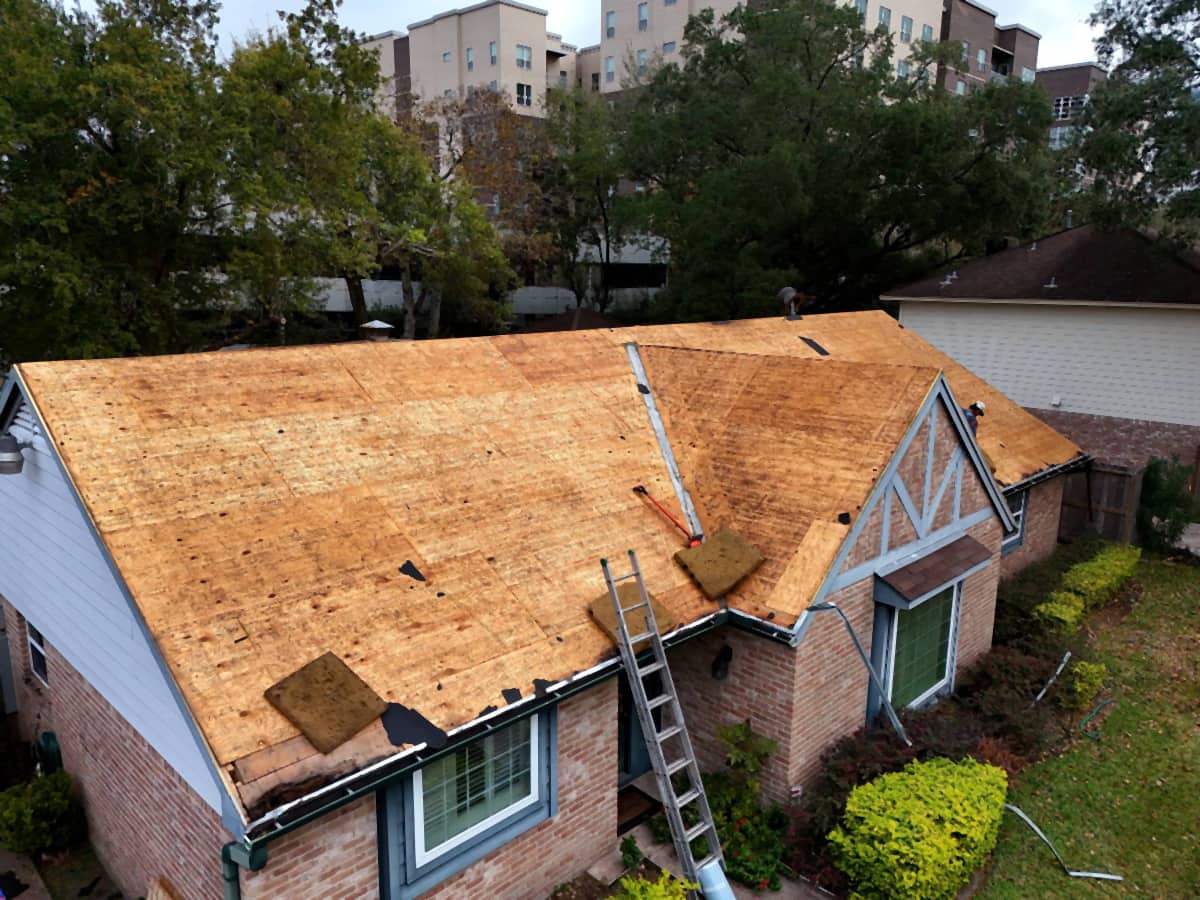
Before anything new goes on, we inspect the roof deck — the plywood or OSB the whole roof is built on. After a tear-off we can finally see the wood that the old roof was hiding. Soft, rotted, or delaminated sheathing gets replaced, and the entire deck is re-nailed to current code so it's locked tight to the rafters before a single new layer goes down.
This is the step that quietly disappears on a fast, cheap install. A re-nailed, sound deck is the foundation for both the wind warranty and a roof that doesn't develop soft spots and squeaks a few years in — it's worth doing right while the deck is exposed.
FeltBuster synthetic underlayment
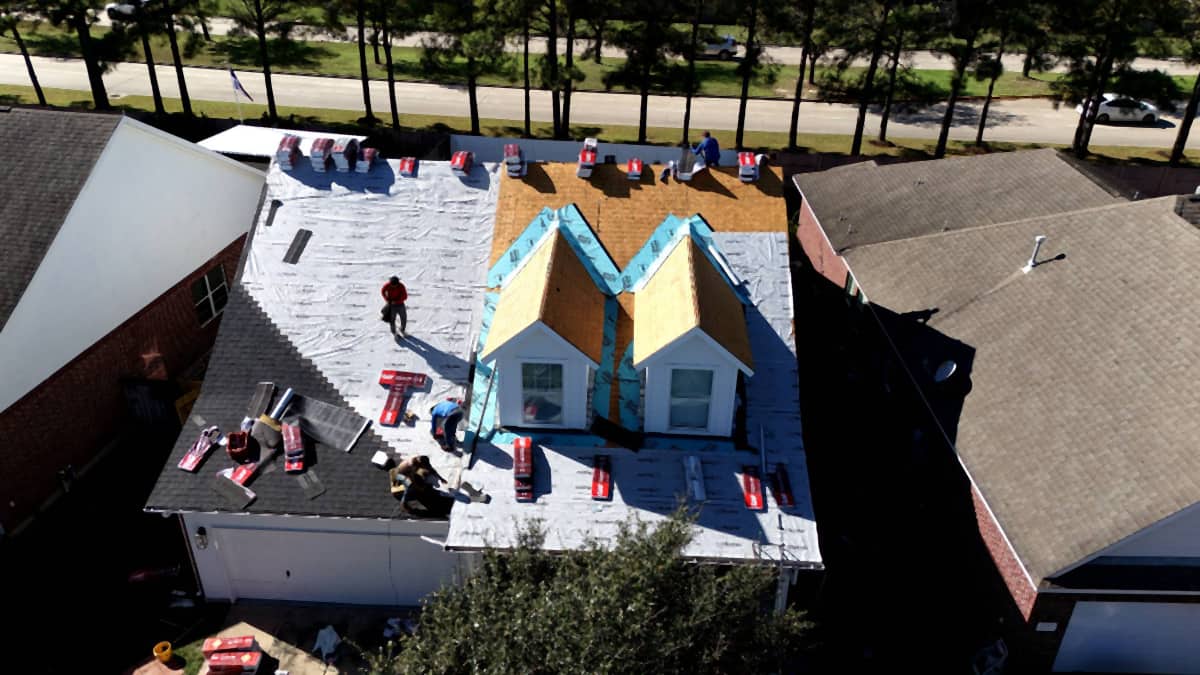
Over the deck goes FeltBuster synthetic underlayment — not the old 15-pound felt paper a lot of crews still roll out. Felt soaks up water, wrinkles, tears underfoot, and can degrade in attic heat. FeltBuster is a synthetic that lays flat, resists tearing, sheds water, and gives the roof a tough, water-shedding layer beneath the shingles.
It's the difference between a secondary barrier that holds up for the life of the roof and one that's already breaking down. Since Houston combines heavy rain with serious attic heat, the underlayment matters more here than people think.
StormGuard ice & water shield
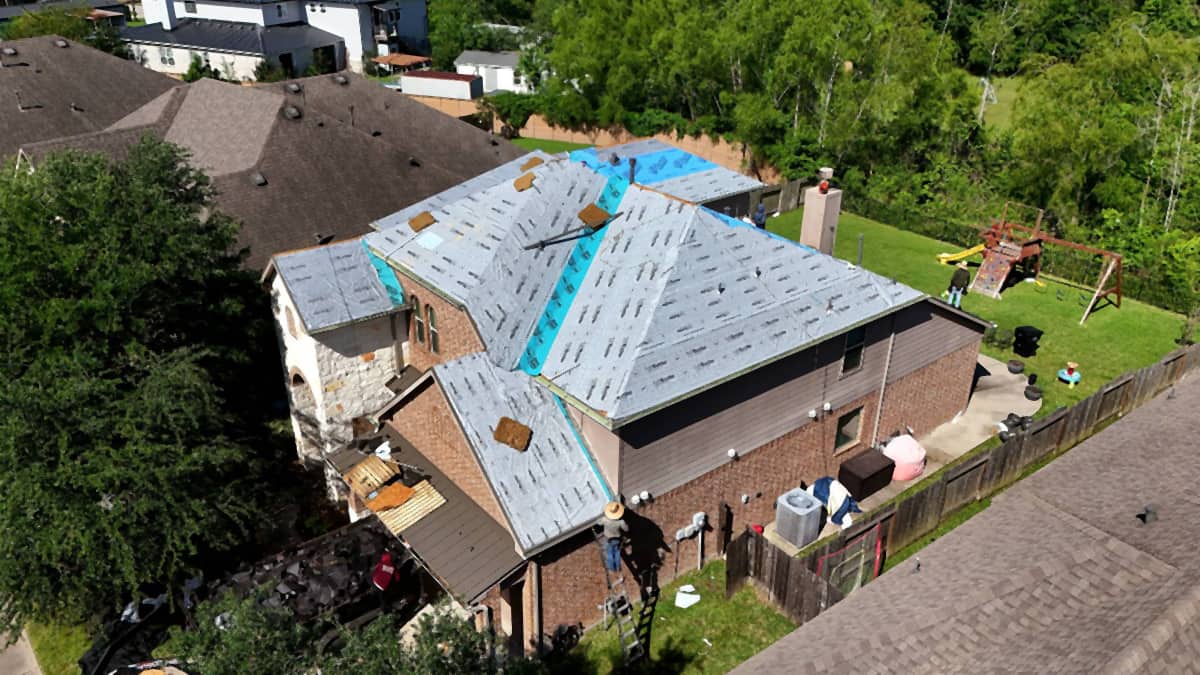
Most leaks don't start in the middle of a roof — they start at the weak points: valleys where two roof planes dump water together, around penetrations like pipes and chimneys, and along vulnerable edges. We seal those areas with StormGuard, a self-adhering ice and water shield that bonds directly to the deck and even seals around nail shanks.
Where standard underlayment sheds water, StormGuard creates a watertight membrane exactly where wind-driven rain tries hardest to get in. It's targeted, premium protection at the spots that fail first.
Purpose-made starter strips
The first course at the eaves and rakes is the most exposed part of the roof — it's where wind gets its first chance to grab a shingle and peel. We use purpose-made starter strips there, with a factory adhesive line positioned to lock down the leading edge of the first row of shingles.
A common shortcut is to cut up field shingles to use as starter, which leaves the sealant in the wrong place and a weaker edge. Real starter strips, installed the right way around the whole perimeter, are a big part of why a roof holds in a Gulf Coast wind event.
GAF Timberline HDZ shingles — our standard
Then come the shingles: GAF Timberline HDZ, North America's best-selling architectural shingle, and the standard we install on every roof. These are dimensional, laminated shingles that give a roof depth and shadow line instead of a flat three-tab look.
What sets HDZ apart is GAF's LayerLock technology and the wide nailing zone it creates — the strip on the shingle a roofer aims for when nailing. A wider target means more of the nails land where they're supposed to, which is what makes a fast, accurate, properly fastened roof possible.
On top of that, we nail HDZ with a 6-nail pattern, not the 4-nail minimum. Two extra nails per shingle, multiplied across the whole roof, is meaningful holding power — and the 6-nail pattern is part of what qualifies the roof for GAF's WindProven wind warranty.
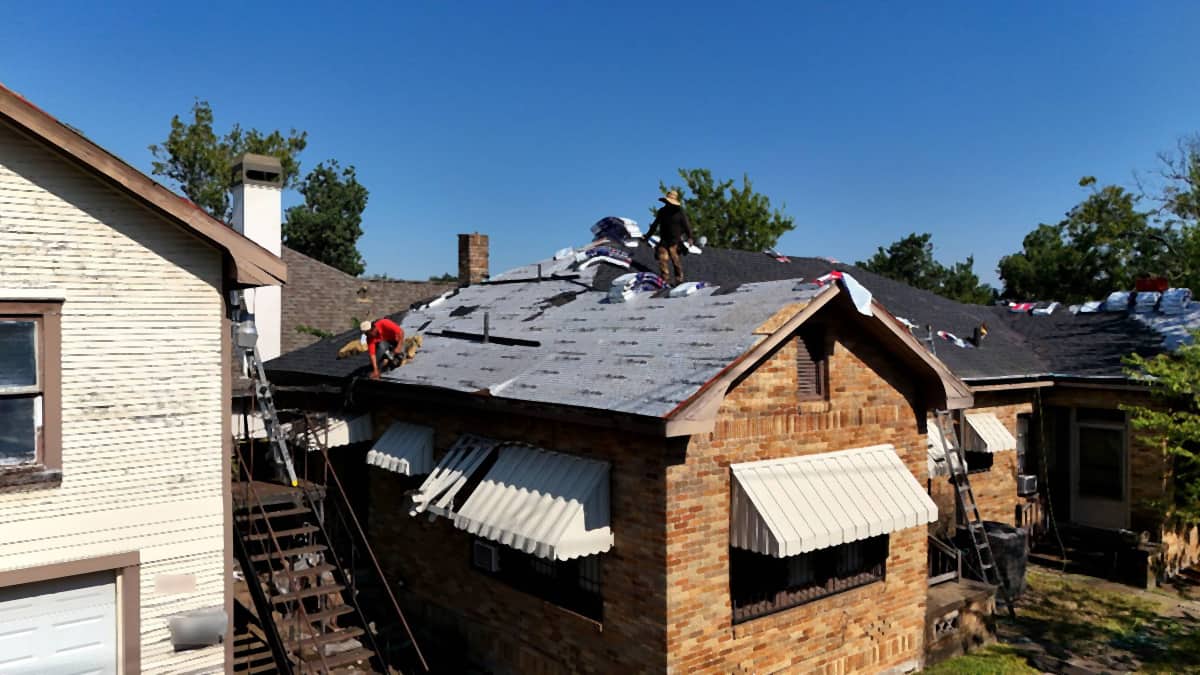
Six nails, not four. FeltBuster, not felt. New flashing, not re-caulked. The details that don't show up in a photo are the ones that decide how long your roof lasts.
TimberTex hip & ridge caps
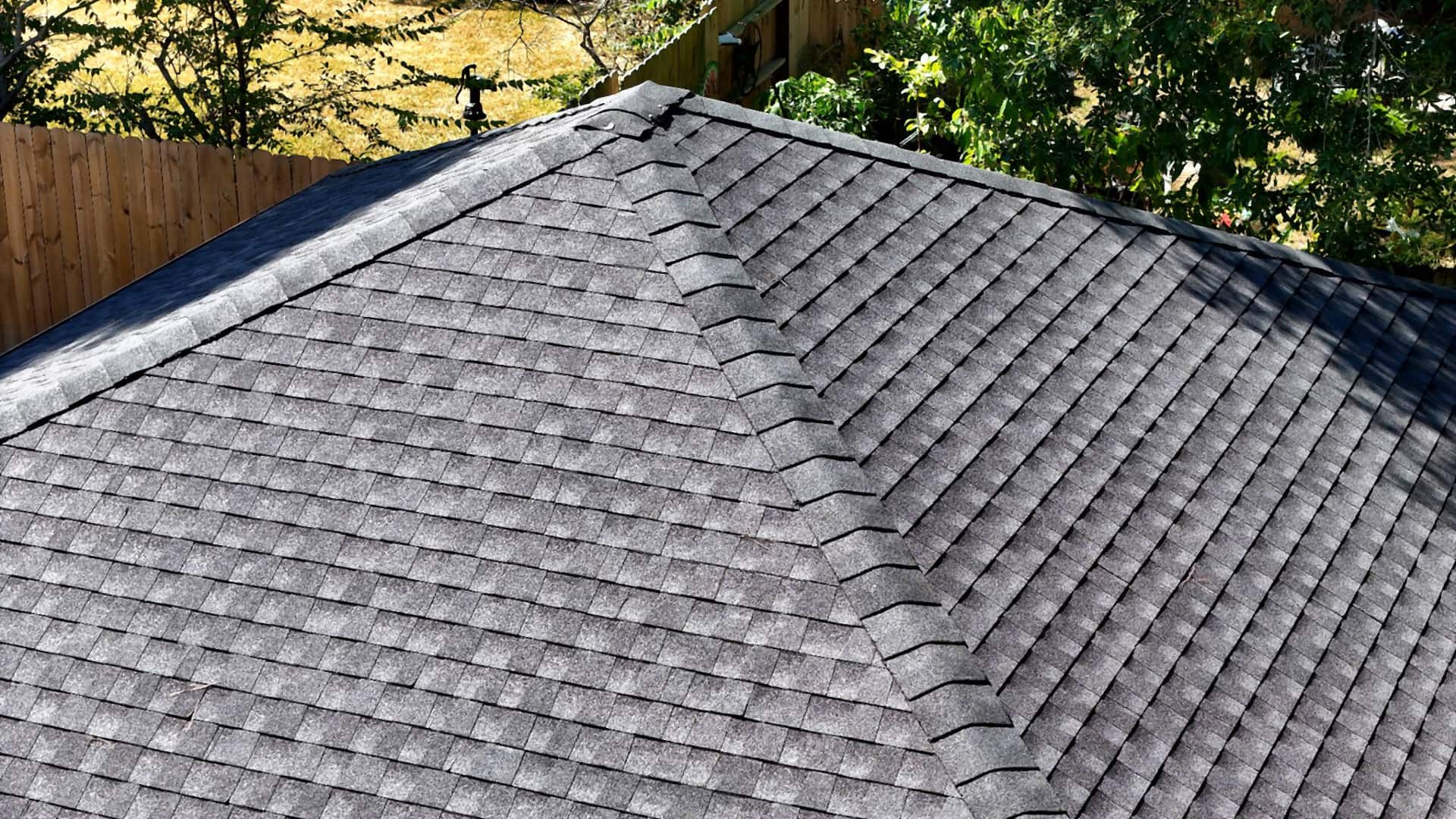
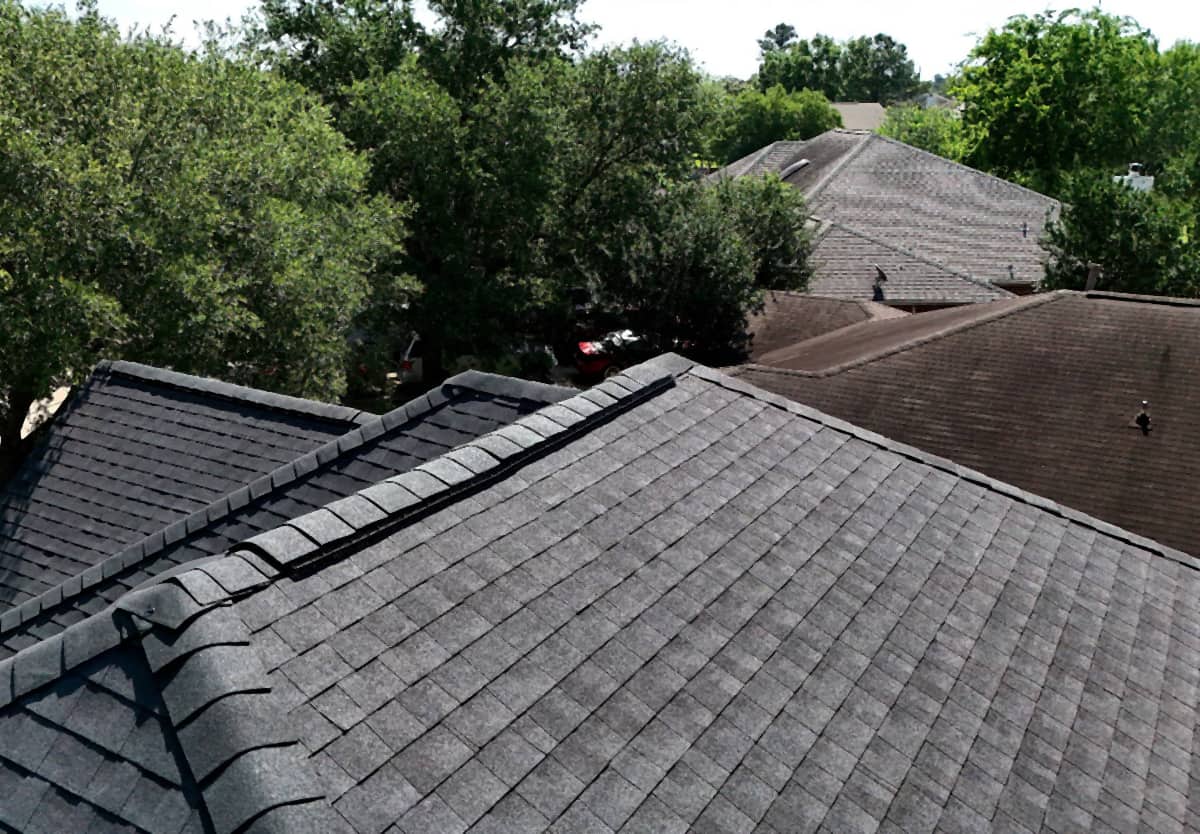
The hips and ridges — the peaks and angled lines at the top of the roof — take more wind and weather than anywhere else, and they need a cap shingle made for the job. We finish with TimberTex, GAF's impact-resistant hip and ridge cap.
TimberTex is purpose-built and pre-shaped to wrap those lines cleanly, giving the roof a finished, substantial look at the top while protecting its most exposed seams. Cutting up field shingles for ridge caps — another common shortcut — looks thinner and doesn't protect as well.
Balanced ventilation
A roof has to breathe. Without balanced ventilation, summer attic heat bakes the shingles from underneath and trapped moisture rots the deck from the inside — aging a brand-new roof prematurely and, in some cases, voiding shingle warranties.
Balanced means the intake and exhaust are calculated to work together: fresh air drawn in low (usually at the soffits) and hot, moist air pushed out high. We install ridge vents where the roofline allows, so the exhaust runs along the peak and the whole attic flushes continuously. We size it to the roof rather than just bolting on whatever was there before.
New flashing and a clean jobsite
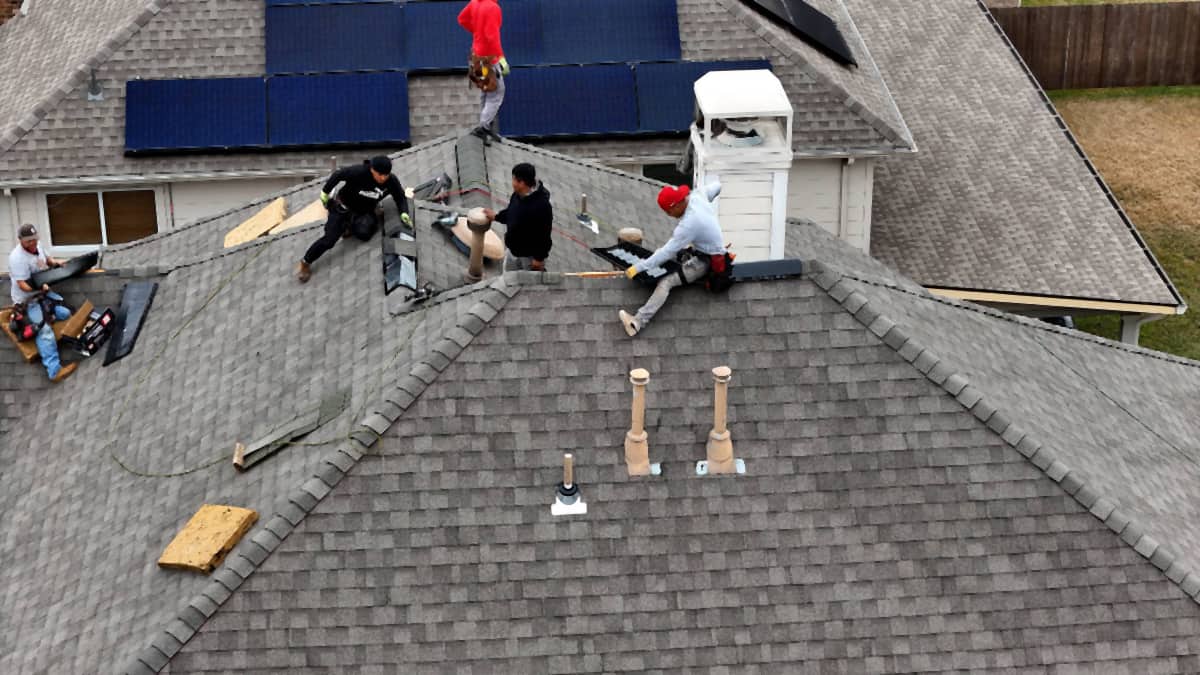
Flashing is the metal that seals the transitions — where the roof meets walls, chimneys, skylights, and valleys. We install new flashing rather than re-using old metal or hiding tired flashing under a bead of caulk. Caulk is not a flashing; it's a temporary patch, and re-used flashing is one of the most common sources of a leak on an otherwise new roof.
When the roof is done, we run a full magnetic sweep of the property to pull stray nails out of the grass, driveway, and flowerbeds. Family-owned means we treat your yard the way we'd want ours treated — the job isn't finished until the cleanup is.
Step up: GAF Timberline UHDZ
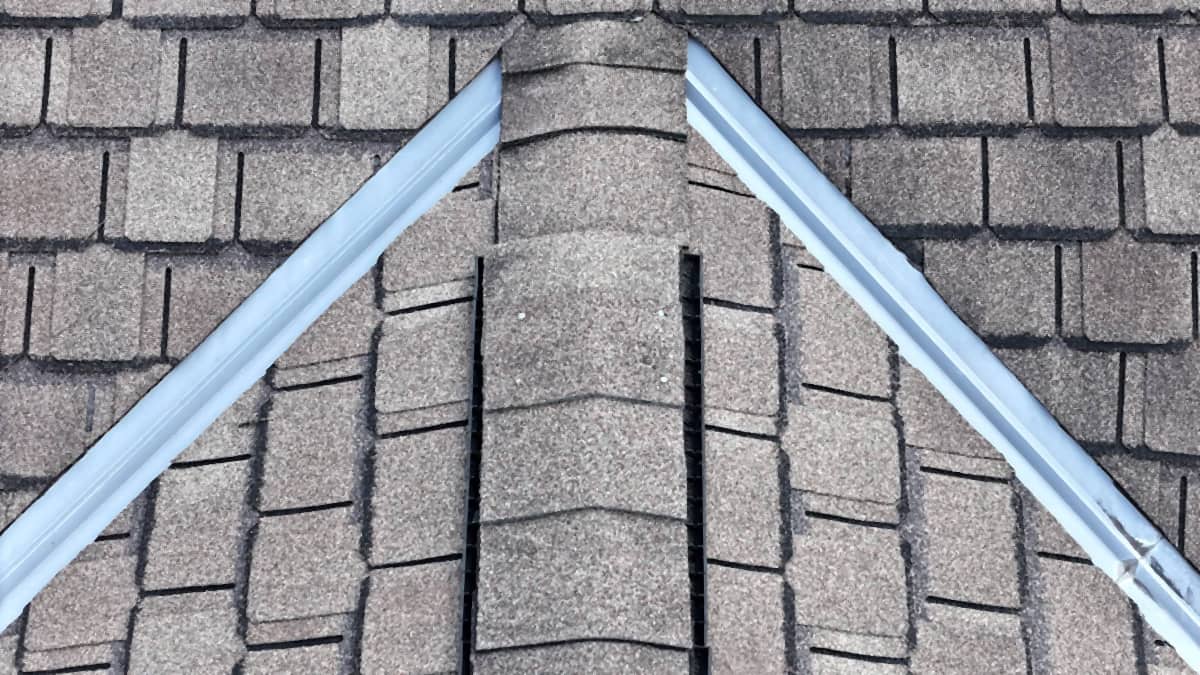
If you want to upgrade from the standard, Timberline UHDZ is the next step. It builds on HDZ with an even larger nailing zone and a richer, more dimensional profile — a deeper shadow line and a more premium look on the roof.
It's the same trusted Timberline family, stepped up in both appearance and the size of the nailing target, for homeowners who want a little more presence and performance than the standard HDZ.
Step up: GAF Timberline AS II (Class 4 impact-resistant)
The other upgrade is Timberline AS II, a Class 4 impact-resistant shingle — the highest impact rating shingles are tested to. AS II is engineered to better withstand hail strikes and impact, which matters a great deal on the Gulf Coast where hail is a regular part of the storm season.
There's a financial angle too: many insurers offer a premium discount for a Class 4 impact-resistant roof, because it's less likely to be damaged in a hailstorm. That discount can offset the upgrade cost over time. Whether your specific carrier offers it — and how much — depends on your policy, so confirm it with your insurer.
If your roof is being replaced through a storm or hail insurance claim, the AS II upgrade is worth a conversation. We can walk through whether it makes sense for your home.
The warranty stack: three distinct warranties
A complete-system roof isn't backed by one warranty — it's backed by three, and they cover different things. Together they're the reason installing the whole GAF system matters: most of this coverage is only available when the qualifying GAF components are installed as a system, the way we do it.
We register your manufacturer warranty after the install and hand you the paperwork, so the coverage is documented and on file — not just promised on the driveway.
- GAF System Plus — the registered manufacturer warranty covering the GAF materials in your system.
- GAF WindProven — a limited wind warranty with no maximum wind-speed limit, available because we install the qualifying GAF components (including the LayerLock shingles and 6-nail pattern).
- Handyhands 10-year workmanship warranty — our own guarantee covering the quality of the installation itself, backed by the people who actually built your roof.
Materials, financing, and storm claims
The complete system is our standard, the two upgrades are there if you want more performance or a possible insurance discount, and we offer financing to help spread the cost of a replacement.
And if your roof is being replaced because of storm or hail damage, the materials are only part of the story — getting the claim documented and paid fairly is its own process. We specialize in that, and we keep all the detail on our insurance claims hub so this page can stay focused on the roof itself.
Questions, answered
Common questions
GAF Timberline HDZ vs. UHDZ vs. AS II — what's the difference?
HDZ is our standard architectural shingle, with LayerLock and a wide nailing zone for an accurate, well-fastened roof — it's what we install on every roof. UHDZ is a step up from HDZ with an even larger nailing zone and a richer, more dimensional profile for a more premium look. AS II is the Class 4 impact-resistant upgrade, engineered to better resist hail, and it may qualify your home for an insurance premium discount. All three are part of the GAF Timberline family; the right one depends on your budget, your look, and whether hail protection and a possible insurance discount matter to you.
Is the Class 4 AS II shingle worth the upgrade in Houston?
For many Houston-area homeowners, it's worth a serious look — hail is a regular part of our storm season, and a Class 4 shingle is built to take an impact better than a standard shingle. On top of the durability, many insurers offer a premium discount for a Class 4 impact-resistant roof, which can offset the upgrade cost over time. Whether your carrier offers that discount, and how much, depends on your policy — so confirm it with your insurer. We're happy to walk through whether it makes sense for your home.
Why six nails instead of four?
Four nails per shingle is the bare minimum some crews use; we nail GAF Timberline HDZ with a six-nail pattern. Two extra nails per shingle, across the whole roof, is real added holding power against wind — and the six-nail pattern is part of what qualifies your roof for GAF's WindProven wind warranty, which has no maximum wind-speed limit. It's a small thing on each shingle that adds up to a much stronger roof.
Do I really need the whole system, or can I just get new shingles?
You can find someone to lay shingles over a tired deck, old felt, and re-caulked flashing — but you'd be paying for the part you can see and skipping the parts that actually keep water out. We install the complete system on every roof because the underlayment, leak barriers, starter, flashing, and ventilation are what determine how long the roof lasts and what warranty coverage it qualifies for. It's our standard, not an upsell.
What warranties come with my roof?
Three distinct warranties. GAF System Plus is the registered manufacturer warranty on the GAF materials. GAF WindProven is a limited wind warranty with no maximum wind-speed limit, available because we install the qualifying GAF components. And our Handyhands 10-year workmanship warranty covers the installation itself. We register the manufacturer coverage and hand you the documentation so it's all on file.
Free, no-pressure
Get your free roof report
We get on the roof, and you get a real document — not a sales pitch. You get photos of every problem area, written findings in plain English, and a repair estimate if a repair is the honest answer. Emailed to you and left with you in print — yours to keep, whether you hire us or not.
- Photos of every problem area on your roof
- Written findings, in plain English
- A repair estimate, if a repair is the honest answer
If it's storm damage, we handle the insurance claim with you. Financing available.
Roof leaking? We answer 24/7 — call any hour. Or email Aldo@handyhandsroofing.com
Get your free roof report
Name and phone is all we need — we'll call you back. No obligation.
Got it — we have your details
Thanks — we’ll contact you about your request. Prefer to talk now? Call (346) 276-6492.
GAF Certified · 10-Year Workmanship Warranty · Insurance restoration specialists