
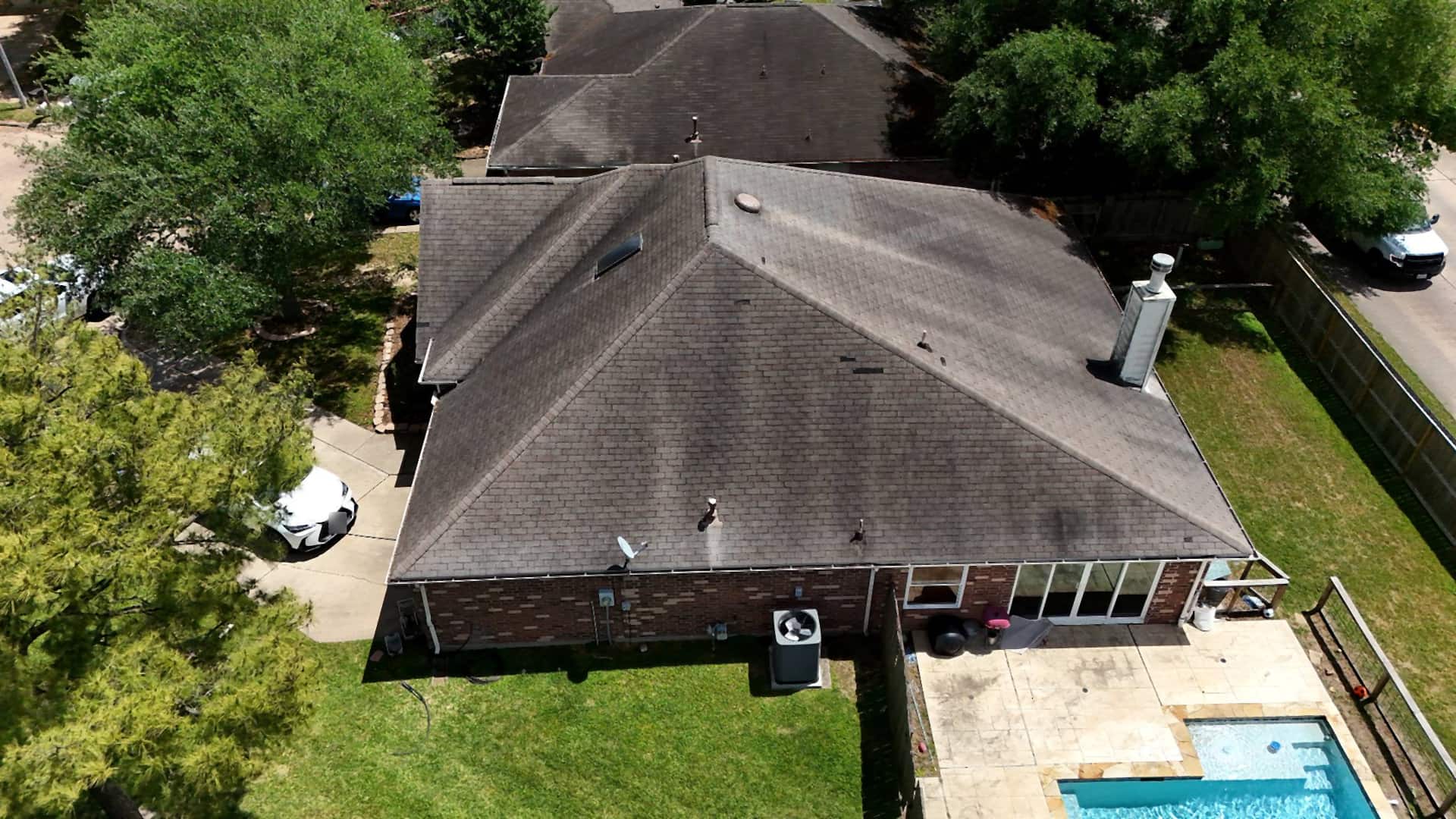
Roofing
Storm & hail damage, handled.
Houston weather is hard on roofs. We inspect for storm and hail damage, document what we find, stand with you through the insurance process, and rebuild the whole system the right way when a replacement is owed.
- GAF Certified · Factory-certified installer
- 10-Year · Workmanship warranty
- Family-Owned · Houston since 2023
How do I know if my Houston roof has storm or hail damage?
Much hail damage is not visible from the ground. Bruised or fractured shingles, granule loss around impacts, and dented vents and flashing are the signs. We get on the roof, photograph what we find, and give you a written report you can take straight to your insurer, free either way.
Why Gulf Coast storms are hard on a roof
If you own a home anywhere around Houston, your roof takes a beating. Spring and summer bring straight-line winds, hail, and the kind of driving rain that finds every weak point. Hurricane season layers tropical systems on top of that. Year after year, that weather works on a roof — and it can leave damage you'd never spot from the ground.
The hard part for a homeowner is that a lot of storm damage doesn't announce itself. You rarely see it from the ground, and a roof can keep shedding water for a while even after a storm has compromised it. By the time a stain shows up on a ceiling, the damage has usually been there for a season or two. That's why a real inspection after a significant storm matters — it catches what you can't see from the driveway.
What wind damage looks like
Wind damage is easy to confirm once you're on the roof and easy to miss from the ground — which is exactly why it's worth a real look after a Houston wind event. Here's what we're checking for:
- Blown-off shingles — shingles torn completely off the roof, leaving the underlayment or deck exposed.
- Creased shingles — shingles folded back and cracked along the fold by the wind; the crease breaks the shingle's water seal even after it flops back down.
- Lifted shingles — shingles broken free at the edges so they no longer lie flat and can be peeled up by the next gust.
- Loss of adhesion at the seal strip — the factory tar strip that bonds each shingle to the one below is what holds a roof together in wind. Once a strong gust breaks that seal, the shingle is no longer sealed down — and it stays vulnerable even when it looks fine from the ground.
That last one — failure at the tar strip that seals the shingles to one another — is the damage homeowners almost never see and adjusters specifically look for. A shingle can look perfectly normal and still have lost the seal that makes it weatherproof.
What hail damage looks like
Hail works differently. It usually doesn't tear the roof open all at once — it bruises it, and the damage progresses over time. Here's how it typically shows up and develops:
- Impact marks — small spots, often round, where a stone struck the shingle and knocked the protective granules loose.
- Displaced granules — the granule layer is the shingle's sunscreen; hail knocks it off in small spots, exposing the asphalt mat underneath.
- Mat blistering and fiber exposure — over time, the exposed mat blisters and the underlying fibers work loose.
- Progression to a leak — left long enough, those weakened spots keep breaking down, and what started as minor-looking granule loss turns into an actual leak.
Both wind and hail are legitimate, qualifiable storm damage — and when they're widespread, they can justify a full roof replacement rather than a patch. Whether your policy covers it is the insurer's call; documenting it accurately is ours.
It starts with an honest inspection
Every storm job starts the same way: we get up on your roof and actually look. We assess the roof's age and overall condition, check the areas that fail first — valleys, flashing, penetrations, and edges — and look for the signs that a storm did real damage versus normal wear.
Then we tell you the truth. If your roof took legitimate storm damage worth pursuing, we'll show you. And if it didn't — if it just needs a repair or some maintenance instead of a full claim — we'll tell you that too. We're a family-owned, GAF-Certified contractor, and our reputation is worth more to us than talking you into a roof you don't need.
If you don't need a new roof, we'll tell you. A free, honest inspection is the whole foundation of how we work.
We document the damage thoroughly
Documentation is what separates a claim that goes smoothly from one that drags. When we inspect a storm-damaged roof, we record what we find with detailed photos and notes — the location and pattern of damage, the affected slopes, the flashing and penetrations, and the supporting evidence an insurer expects to see.
That record does two jobs. It gives you a clear, honest picture of your roof's actual condition, and it gives your insurance claim the backup it needs so the conversation is about facts, not guesses. How an insurer then weighs that damage — exactly what an adjuster looks for and what's typically covered — is laid out in depth in our guide to what storm and hail damage is covered, linked below.
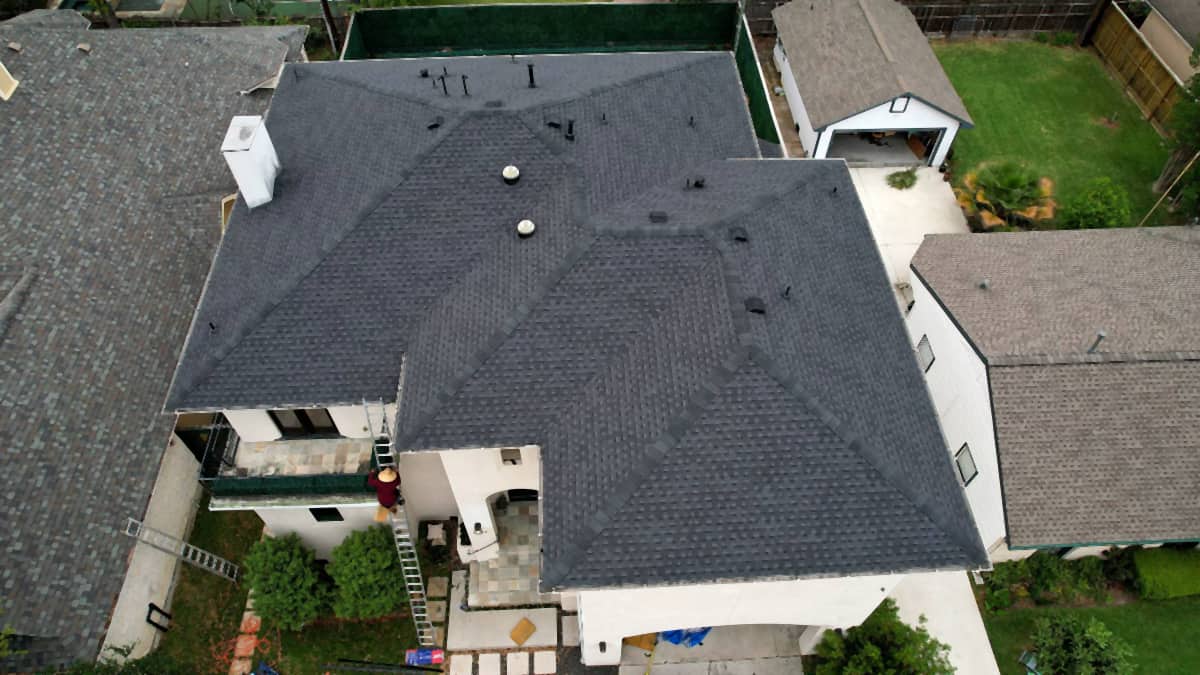
We stand with you through the insurance claim
Storm-damage insurance restoration is something we specialize in. We don't just hand you a report and disappear at the hard part. We document the damage, we attend the adjuster meeting and meet them on the roof so nothing gets missed, and when the first estimate leaves out items that are legitimately owed, we supplement for them properly.
We can't promise how any individual insurer will rule on a claim — nobody honest can. What we can promise is that we'll do our part right: an honest inspection, thorough documentation, and standing with you through the process. The full step-by-step of how Texas roof claims work — filing, adjusters, RCV vs. ACV, supplements, and denials — lives on our Insurance Claims hub.
- Honest inspection and clear, documented findings
- We attend the adjuster meeting and walk the roof with them
- We supplement legitimately owed items the first estimate left out
- You receive a documentation packet to keep for your records and renewal
Full-system storm replacement, built to last the next storm
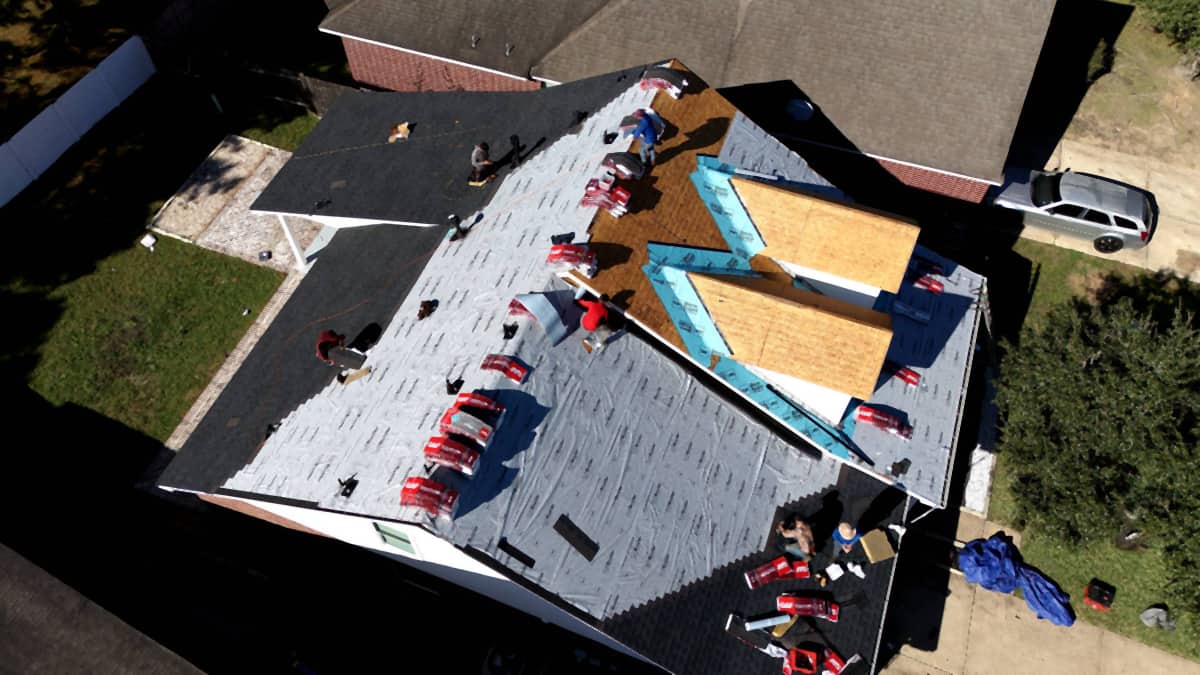
When a roof is past saving, we don't just lay new shingles over old problems — we rebuild the complete system from the deck up. That means inspecting and re-nailing the deck to code, then FeltBuster synthetic underlayment instead of old-style felt, StormGuard ice & water shield at the valleys, penetrations, and vulnerable edges where leaks start, and purpose-made starter strips at the eaves and rakes.
On top of that goes GAF Timberline HDZ shingles installed with the LayerLock 6-nail pattern — not the 4-nail shortcut — finished with TimberTex impact-resistant hip & ridge caps, new flashing (never re-used or just re-caulked), and balanced, calculated ventilation with ridge vents where the roof allows. We end every job with a full magnetic nail sweep of your yard.
Because a storm roof should be built to survive the next storm, you can step up to GAF Timberline UHDZ for a larger nailing zone and a richer profile, or to GAF Timberline AS II — a Class 4 impact-resistant shingle that may qualify you for an insurance premium discount. Financing is available when the work isn't fully covered by a claim, and we build that same complete system on every roof we replace.
Warranties that back a storm roof
A storm roof we build is backed by three separate warranties, and they cover different things. GAF System Plus is the registered manufacturer warranty on the materials. GAF WindProven carries no maximum wind-speed limit — which matters on the Gulf Coast. And on top of the manufacturer coverage, we add our own Handyhands 10-year workmanship warranty on the install.
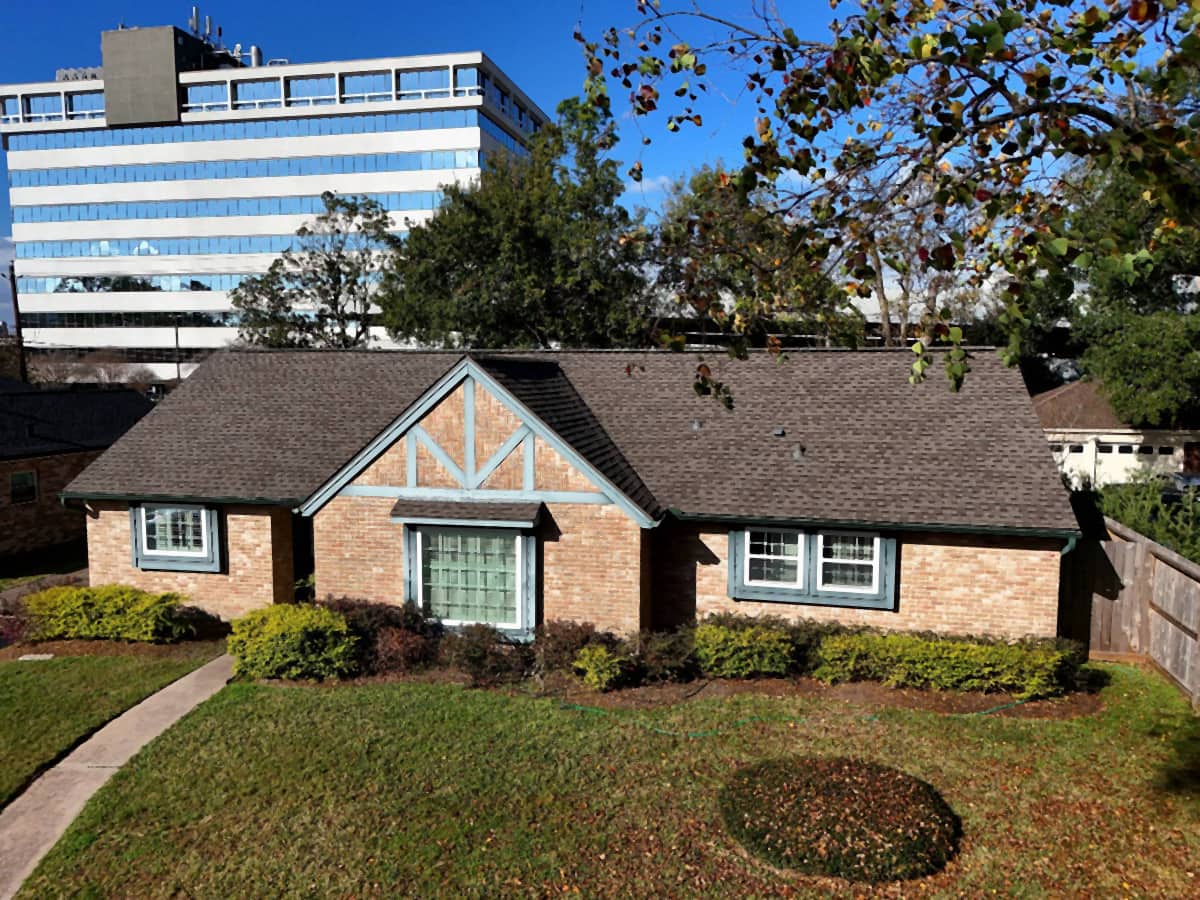
Hit by a storm? Start with a free inspection
After a major wind or hail storm, the smartest first move is a free, no-pressure inspection — before small, hidden damage turns into a bigger problem. Call us at (346) 276-6492 and we'll get up there, take an honest look, and tell you exactly where you stand. We serve homeowners across Houston, Katy, Cypress, Spring, Tomball, The Woodlands, Pearland, Sugar Land, Memorial, and The Heights.
Storm just came through? Call (346) 276-6492 for a free, no-pressure inspection.
Free · instant · no phone number needed
Was your roof in one of these storms?
Enter your address and we'll show you every hail and damaging-wind report NOAA recorded near it since 2019. Knowing the date a storm hit your roof is the single most useful fact in an insurance claim — and this costs you nothing.
Source: NOAA / NCEI Storm Events Database — reports filed by trained spotters, officials and the public. These are reports, not radar coverage: if nothing shows up near you it means nobody filed a report there, not that no hail fell. The only way to know what your roof actually took is to look at it.
Questions, answered
Common questions
Should I get my roof inspected after a storm even if I don't see damage?
Yes. A lot of storm damage isn't visible from the ground, and a roof can keep shedding water for a while even after it's been compromised. A free, honest inspection after a significant wind or hail storm catches what you can't see — and if your roof is fine, we'll tell you that plainly.
Will my insurance cover storm or hail damage to my roof?
Wind and hail damage is often a covered peril on Texas homeowners policies, but every policy and claim is different, and we can't guarantee how an insurer will rule. What we do is inspect honestly, document the damage thoroughly, attend the adjuster meeting, and supplement legitimately owed items. You can read more about what's typically covered in our Insurance Claims guide.
Do you handle the insurance claim for me?
We specialize in storm-damage insurance restoration. We document the damage, attend the adjuster meeting and walk the roof with them, supplement the items the first estimate leaves out, and hand you a documentation packet for your records. The full claim process — filing, adjusters, RCV vs. ACV, supplements, denials — is laid out on our Insurance Claims hub.
What goes into a storm replacement roof?
We rebuild the complete GAF system from the deck up: deck re-nailing to code, FeltBuster synthetic underlayment, StormGuard ice & water shield at vulnerable areas, starter strips, GAF Timberline HDZ shingles with the LayerLock 6-nail pattern, TimberTex hip & ridge caps, new flashing, and balanced ventilation. You can step up to Timberline UHDZ or the Class 4 impact-resistant Timberline AS II.
What if my claim only covers part of the cost?
When a claim doesn't fully cover the work, or you're choosing a paid upgrade like a Class 4 impact-resistant shingle, financing is available. We'll walk you through the options so you can make the call that fits your home and budget.
Free, no-pressure
Get your free roof report
We get on the roof, and you get a real document — not a sales pitch. You get photos of every problem area, written findings in plain English, and a repair estimate if a repair is the honest answer. Emailed to you and left with you in print — yours to keep, whether you hire us or not.
- Photos of every problem area on your roof
- Written findings, in plain English
- A repair estimate, if a repair is the honest answer
If it's storm damage, we handle the insurance claim with you. Financing available.
Roof leaking? We answer 24/7 — call any hour. Or email Aldo@handyhandsroofing.com
Get your free roof report
Name and phone is all we need — we'll call you back. No obligation.
Got it — we have your details
Thanks — we’ll contact you about your request. Prefer to talk now? Call (346) 276-6492.
GAF Certified · 10-Year Workmanship Warranty · Insurance restoration specialists